Juventus Dominates Lecce in Serie A Clash
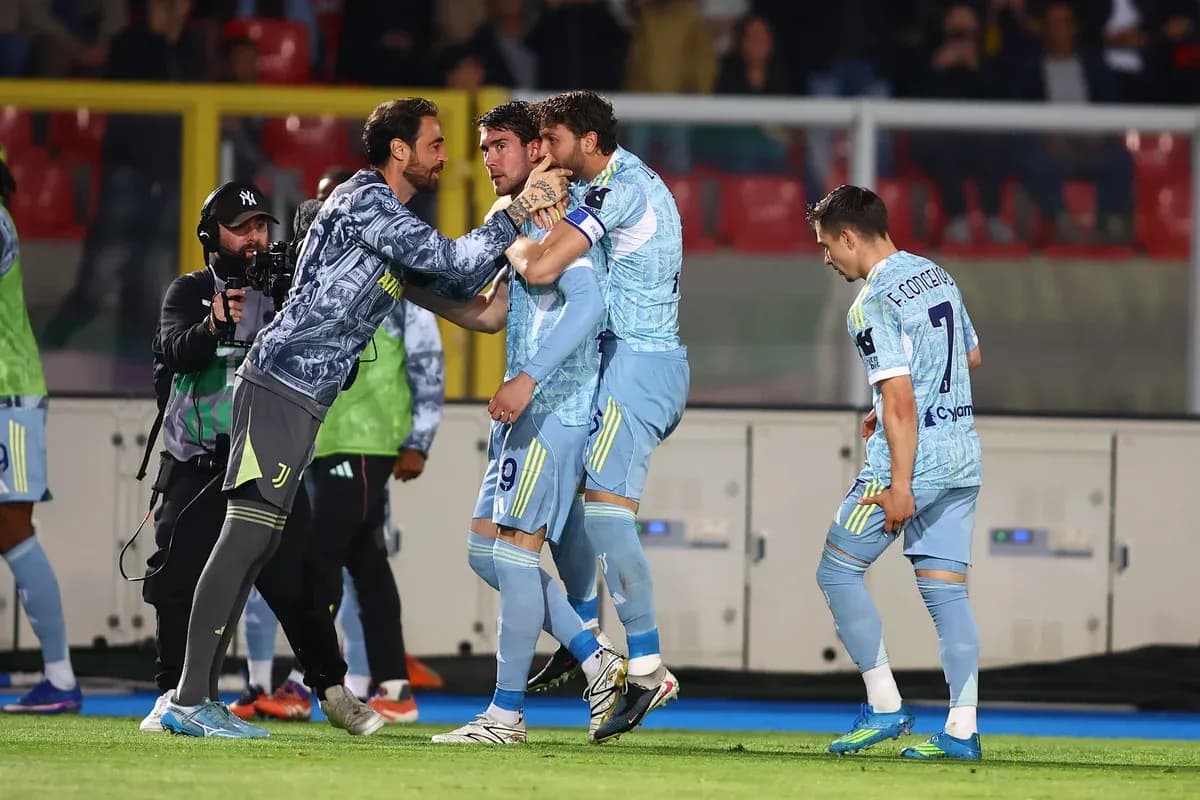
Under the lights of Via del Mare, this was a meeting of opposites in Serie A’s Round 36: a Lecce side fighting for survival against a Juventus team cruising toward the Champions League places. Following this result, the table tells the story clearly. Lecce sit 17th on 32 points, with a goal difference of -24 (24 scored, 48 conceded in total), still trapped in a relegation dogfight. Juventus, by contrast, are 3rd with 68 points and a goal difference of +29 (59 for, 30 against overall), their 1–0 away win here another brick in a season built on control and defensive rigour.
Both coaches mirrored each other structurally, sending their teams out in a 4-2-3-1. For Lecce, Eusebio Di Francesco leaned into familiarity: Wladimiro Falcone behind a back four of Danilo Veiga, Jona Siebert, Tiago Gabriel and Antonino Gallo. In front, Ylber Ramadani and Ousmane Ngom formed the double pivot, with Santiago Pierotti, Lameck Banda and Lameck Coulibaly supporting lone striker Walid Cheddira. It was a shape designed less to overwhelm than to survive, a recognition of Lecce’s season-long struggle in front of goal. At home they average just 0.7 goals scored and 1.3 conceded, the same 0.7 for and 1.3 against on their travels, a remarkably symmetrical but grim attacking return.
Luciano Spalletti’s Juventus matched the 4-2-3-1 but imposed a very different personality on it. Michele Di Gregorio started in goal, shielded by a back line of Pierre Kalulu, Bremer, Lloyd Kelly and Andrea Cambiaso. Manuel Locatelli and Teun Koopmeiners anchored midfield, with Francisco Conceicao, Weston McKennie and Kenan Yildiz floating behind Dusan Vlahovic. Where Lecce’s version of the system was about containment, Juventus used it as a platform for territorial dominance, befitting a side that, in total this campaign, scores 1.6 goals per match and concedes only 0.8.
The tactical voids on both sides shaped the contest before a ball was kicked. Lecce were without M. Berisha (thigh injury), S. Fofana and Kialonda Gaspar (both knee injuries), and Riccardo Sottil (back injury). The absence of Gaspar in particular stripped Di Francesco of a physically imposing defender who, in his season profile, had blocked 21 shots and brought aerial security to a fragile back line. Without him, Siebert and Tiago Gabriel had to handle Vlahovic’s presence with less margin for error.
Juventus were missing J. Cabal and Arkadiusz Milik, both with muscle injuries. Cabal’s absence limited Spalletti’s flexibility in rotating his defensive options, while Milik’s unavailability reduced the bench’s pure centre-forward depth. Yet with Vlahovic leading the line and a bench boasting Jonathan David, Jeremie Boga and Lois Openda, Juventus still travelled with an arsenal Lecce could only envy.
Discipline was always likely to be a sub-plot. Lecce’s season-long yellow-card profile shows a pronounced late-game spike: 28.57% of their yellows arrive between 76–90 minutes, with another 22.22% between 61–75. Juventus are not far behind in that late aggression, taking 22.45% of their yellows between 61–75 and 20.41% from 76–90. In a match where Lecce were chasing and Juventus protecting a narrow lead, those tendencies threatened to drag the game into a scrappy, card-strewn finale. The red-card histories added extra edge: Banda, Gaspar and Cambiaso have all seen red this season, with Cambiaso’s dismissal underlining how his high-energy role on the flank can tip from asset to liability.
The “Hunter vs Shield” duel was embodied in Kenan Yildiz and the Juventus attack against Lecce’s brittle defensive record. Yildiz arrives as one of Serie A’s most complete young forwards: 10 goals and 6 assists in total this season, 60 shots with 38 on target, and 73 key passes from 1,193 total. He is not just a finisher but a creative hub, and his 145 dribble attempts (77 successful) make him a persistent one-on-one threat. Against a Lecce side that has kept only 4 clean sheets at home and 9 in total, his ability to drift between the lines and combine with Vlahovic was always likely to tilt the game.
On the other side, Lecce’s “hunter” was more collective than individual. Banda, with 4 goals and 3 assists in total this season, is their most explosive outlet, his 77 dribble attempts and 47 fouls drawn illustrating how he destabilises defences. Yet Lecce’s overall attacking numbers betray the limitation: they have failed to score in 10 home matches and 19 games in total. Cheddira’s role as a lone striker was thus as much about occupying Bremer and Kelly as it was about finishing the few chances that might appear.
The “Engine Room” battle pitted Locatelli and Koopmeiners against Ramadani and Ngom. Locatelli’s season has been quietly dominant: 2,626 passes at an 88% accuracy, 95 tackles, 23 blocked shots and 37 interceptions. He is both metronome and shield. His disciplinary profile—9 yellows and even a missed penalty in his season record—speaks to a player operating permanently on the edge, willing to foul to break rhythm. Opposite him, Ramadani is Lecce’s heartbeat: 3,040 minutes, 88 tackles, 46 interceptions and 1,390 passes at 80% accuracy. His duel total (333, with 185 won) shows a midfielder constantly firefighting. Against Juventus, he was asked to do it all: protect his centre-backs from Yildiz’s incursions, screen Vlahovic’s drops, and still provide the first pass into Banda and Pierotti.
McKennie added another layer to that midfield dynamic. With 5 goals and 5 assists, 44 key passes and 38 tackles, he is Juventus’ chaos agent between the lines, arriving late into the box and pressing with ferocity. His 39 fouls committed and 5 yellow cards underline how his energy can spill into recklessness—exactly the kind of presence that tests a side like Lecce, who already flirt with disciplinary trouble late in games.
Statistically, the prognosis for Lecce was always grim. Heading into this game they had lost 20 of 36 league matches in total, scoring just 24 times and conceding 48. Their best home win this season is only 2–1; their heaviest home defeat, 0–3, hints at how quickly things can unravel when they are forced to chase. Juventus, by contrast, came in with 19 wins from 36, just 6 defeats overall, and 16 clean sheets. On their travels they average 1.3 goals scored and 0.9 conceded, a profile of a side comfortable managing tight away margins.
Juventus’ penalty record—2 taken, 2 scored in total—contrasted with the more fragile psyches of others in the league, though even they are not flawless from the spot as Locatelli’s missed penalty in his season stats reminds. Yildiz, too, has 1 penalty scored and 1 missed, reinforcing the idea that even elite takers are fallible. But in open play, the visitors’ superiority in chance creation and defensive structure was overwhelming.
In the end, the 1–0 scoreline felt like the logical expression of these trends. Juventus did not need to be spectacular; their season-long defensive solidity and the control exerted by Locatelli and Koopmeiners in midfield allowed them to protect a narrow lead with professional calm. Lecce, once again, were left with the familiar frustration of effort without edge, their low scoring average and high “failed to score” count crystallised into another goalless home outing.
Following this result, Juventus stride on as a side whose numbers and structure scream Champions League, while Lecce remain a team living on the margins, where every missed chance and every late yellow card nudges them closer to the trapdoor.