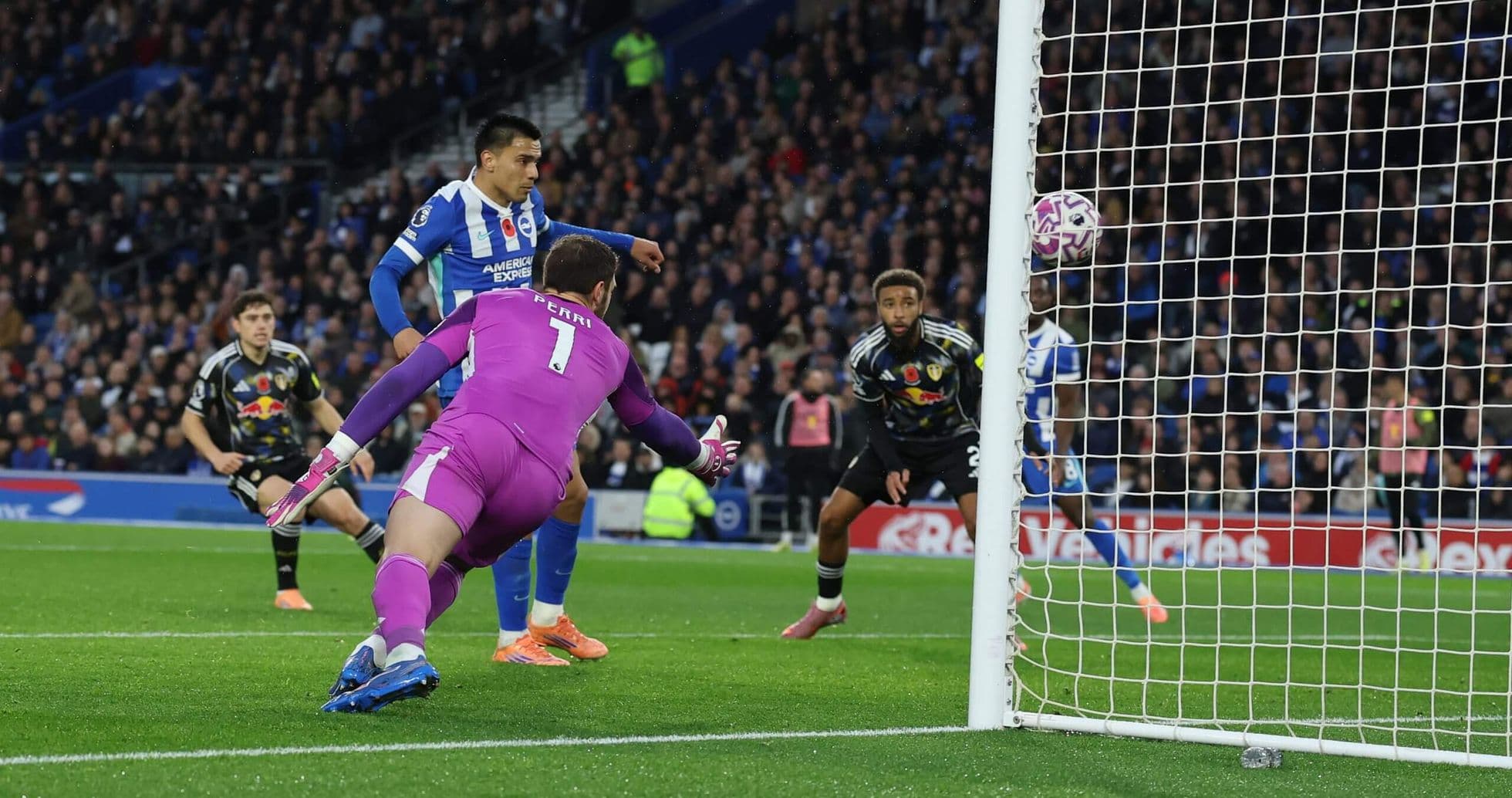
Leeds vs Brighton: Premier League Clash at Elland Road
Elland Road stages a high‑stakes penultimate‑week clash on 17 May 2026 as Leeds host Brighton in the Premier League. With the regular season at Round 37, the table context is clear: Leeds sit 14th on 44 points, effectively safe but still able to climb, while 7th‑placed Brighton, on 53 points, are chasing European football via the Conference League play‑off spot indicated in their league description.
For Brighton, there is something tangible on the line – consolidating or improving that European pathway. For Leeds, it is about finishing a long campaign strongly in front of their own fans and potentially breaking into the top half of the bottom pack.
Form and season picture
In the league, Leeds’ position (14th) and goal difference (-5) tell the story of a side that has been competitive but inconsistent. Across all phases they have 10 wins, 14 draws and 12 defeats from 36 matches, scoring 48 and conceding 53. The underlying home/away split is revealing: Elland Road has been a relative fortress, with 8 wins, 5 draws and only 5 losses at home (28 scored, 21 conceded). Away, they have struggled (2-9-7, 20 for, 32 against).
Brighton arrive with a stronger all‑round profile. In the league they are 7th, with 14 wins, 11 draws and 11 defeats, scoring 52 and conceding 42. Their goal difference of +10 reflects a more balanced side. At the Amex they have been excellent (9-6-3, 30-17), but away form is more mixed: 5 wins, 5 draws and 8 defeats, with 22 scored and 25 conceded. That still represents a better away record than Leeds’ away form, but also shows Brighton are not bulletproof on the road.
Recent form strings underline the contrast in momentum. In the league table snapshot, Leeds’ last five are “DWDWW” – an unbeaten run with three wins, suggesting they are finishing strongly. Brighton’s “WLWDW” is also positive, with three wins in five, but with the occasional setback that has kept them just outside the top six.
Across all phases, the detailed form sequences show both sides have had streaky periods. Leeds’ longest winning streak is only two matches and they have endured a four‑game losing run, underscoring their volatility. Brighton’s longest winning run of three games and a maximum of two consecutive defeats point to greater stability over the season.
Tactical tendencies and key structures
Leeds’ tactical flexibility has been a hallmark of their campaign. They have used eight different formations across all phases, but the backbone is clear: 4‑3‑3 (12 times) and 3‑5‑2 (10 times) dominate, with 3‑4‑2‑1 also appearing regularly (6 times). That mix suggests a coach comfortable toggling between back‑four and back‑three structures depending on opponent and game state.
At Elland Road, the numbers support a front‑foot approach. Leeds average 1.6 goals for and 1.2 against per home game. They have scored four at home in their biggest win (4-1) and can be explosive when it clicks. However, they have also failed to score in 5 of 18 home fixtures and kept 5 home clean sheets, hinting at matches that can swing between open and cagey.
Brighton, by contrast, are structurally settled. They have lined up in 4‑2‑3‑1 in 31 of 36 matches, with only occasional use of 4‑3‑3 and 3‑4‑2‑1. That consistency has underpinned a controlled style: across all phases they average 1.4 goals for and 1.2 against per game. Away from home, their attacking output dips slightly to 1.2 goals per match, while conceding 1.4.
Defensively, Brighton’s clean‑sheet record (10 in total, 5 away) is strong. They have also failed to score only 7 times overall (4 away), compared to Leeds’ 11 blanks (6 away, 5 at home). That suggests Brighton are more reliable at finding a goal, even when they are not at their best.
Discipline may also matter in a potentially tense late‑season game. Leeds’ yellow cards cluster heavily between minutes 31‑75, with a notable spike in the 61‑75 period (23.33% of their yellows). They have one red card across all phases, shown between minutes 46‑60. Brighton’s yellow‑card profile is more concentrated immediately after half‑time (46‑60, 27.91%), but they have no reds recorded.
Key players and penalty dynamics
Both sides lean heavily on experienced centre‑forwards. For Leeds, Dominic Calvert‑Lewin has been the focal point. Across all phases in the Premier League season he has 13 goals and 1 assist in 33 appearances, with 64 shots (32 on target). His physical profile is reflected in 446 duels contested, winning 175, and he is a major reference for long balls and crosses.
Calvert‑Lewin’s penalty record is significant for this fixture: he has scored 4 and missed 1, having also won 2 penalties. Leeds as a team are listed as 6 penalties scored from 6, but the individual data confirm that he has not been flawless from the spot. In a tight game, his ability to handle that pressure – and Leeds’ willingness to play for contact in the box – could be crucial.
Brighton’s main marksman is Danny Welbeck, also on 13 league goals with 1 assist in 35 appearances. He has been efficient with 45 shots and 27 on target, and his all‑round contribution is notable: 460 passes at 78% accuracy and 20 key passes underline his role in link‑up play, not just finishing. His penalty numbers (1 scored, 2 missed) indicate a mixed record from the spot, so Brighton may think carefully about who takes any penalties awarded.
Injuries and selection issues
Both managers have to navigate significant absences.
Leeds are definitely without I. Gruev (knee injury), G. Gudmundsson (muscle injury) and N. Okafor (calf injury). All three are listed as “Missing Fixture”. There are also several “Questionable” players: J. Bogle (hamstring), F. Buonanotte (hamstring) and P. Struijk (hip). Any late negative news on Struijk in particular would reduce Leeds’ options at the back and in build‑up.
Brighton are missing K. Mitoma (thigh injury), S. Tzimas (knee) and A. Webster (knee). Mitoma’s absence removes a major wide threat, while Webster’s unavailability affects central‑defensive depth. D. Gomez (knee) and M. Wieffer (injury) are both doubtful; if neither makes it, Brighton’s rotation options in midfield and defence shrink, potentially forcing them to lean even more heavily on their first‑choice 4‑2‑3‑1.
Head‑to‑head: recent competitive meetings
The last five competitive meetings between these sides, all in the Premier League, show Brighton with a clear edge.
- 1 November 2025: Brighton 3-0 Leeds at the Amex Stadium – Brighton win.
- 11 March 2023: Leeds 2-2 Brighton at Elland Road – draw.
- 27 August 2022: Brighton 1-0 Leeds at The American Express Community Stadium – Brighton win.
- 15 May 2022: Leeds 1-1 Brighton at Elland Road – draw.
- 27 November 2021: Brighton 0-0 Leeds at The American Express Community Stadium – draw.
Across these five, Brighton have 2 wins, Leeds have 0, and there have been 3 draws. Notably, Leeds have not beaten Brighton in this sample, but three of the five have been drawn, indicating that Elland Road meetings, in particular, tend to be tight.
Tactical battle on the day
At Elland Road, Leeds are likely to lean into their stronger home record and crowd energy. A 4‑3‑3 or 3‑5‑2 would both allow them to play to Calvert‑Lewin’s strengths, with wide players attacking Brighton’s full‑backs and plenty of crosses and second‑ball situations. Their home average of 1.6 goals for and 1.2 against suggests they are comfortable in matches with a moderate goal count, where they can out‑fight and out‑run opponents.
Brighton’s settled 4‑2‑3‑1 will prioritise control of the double pivot and structured pressing. Without Mitoma, they may rely more on central combinations and overlapping full‑backs to create overloads. Their away average of 1.2 goals for and 1.4 against implies that they often find a way to score but can be exposed in transition, especially if full‑backs push high.
Set‑pieces and penalties loom large. Leeds have won multiple penalties through Calvert‑Lewin and have a strong team conversion record, while Brighton have shown they can draw fouls in dangerous areas but have a less convincing individual penalty profile.
The verdict
The data points to a finely balanced contest. Brighton are the better side across the season, with more wins, a positive goal difference and a strong claim on European qualification. However, Leeds’ home form (8 wins, 5 draws, 5 losses) and recent league momentum (“DWDWW”) make Elland Road a difficult assignment, especially this late in the season.
Brighton’s superior head‑to‑head record and more consistent structure give them a slight edge on paper, but their patchy away numbers and key injuries – notably Mitoma and Webster – pull that advantage back. Leeds’ reliance on Calvert‑Lewin’s physical presence and set‑piece threat, combined with their solid home defensive record (21 conceded in 18), suggests they are well‑placed to take something.
A draw would be a logical outcome based on the data, with a narrow, low‑margin game likely. Brighton have the quality to edge it if they are clinical, but Leeds’ resilience at Elland Road and their upward form curve make them strong candidates to extend their unbeaten run, even against European‑chasing opposition.