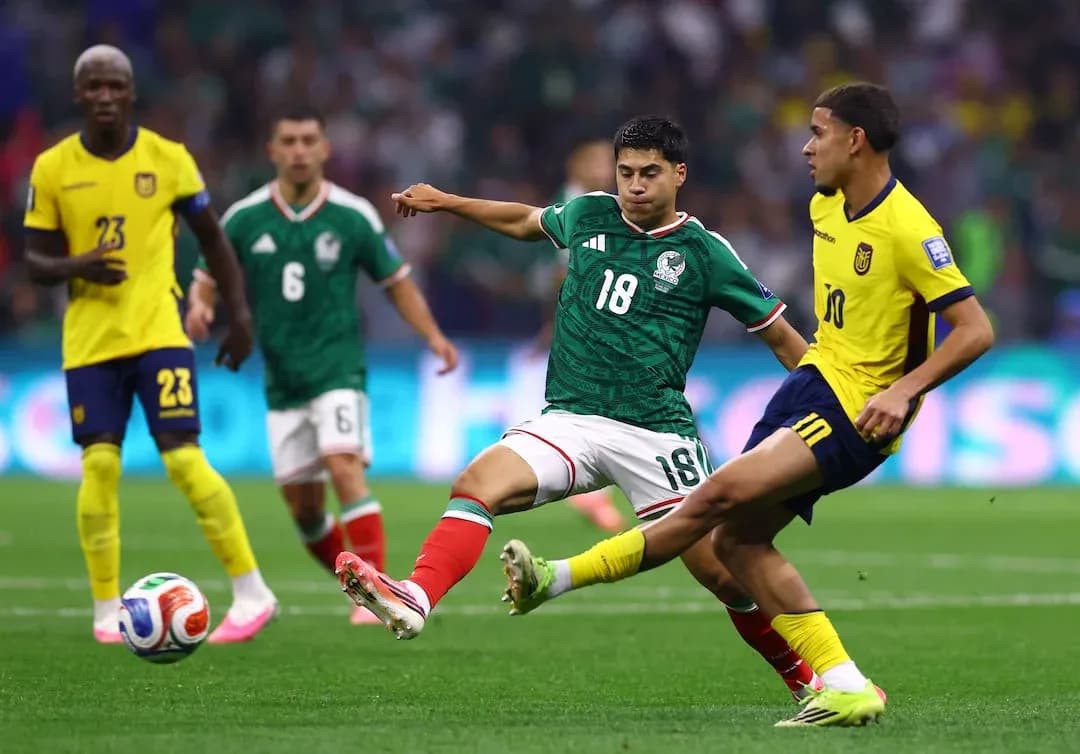
Mexico Dominates Ecuador 2-0 in World Cup Round of 32
Mexico’s 2-0 win over Ecuador at Estadio Banorte in this World Cup Round of 32 tie was a clinic in controlled aggression without the ball and direct incision when it mattered. Despite conceding 57% possession and facing more corners (3 to 8), Mexico’s 4-3-3 under Javier Aguirre repeatedly bent the game toward the spaces Ecuador left between their lines, striking twice in the first half and then managing the tempo with disciplined structure and selective pressing.
Mexico’s Attacking Plan
Mexico’s attacking plan was built around verticality and wide combinations from the front three. Julián Quiñones, starting on the left of the 4-3-3, was the key reference point between the lines. His opener on 22' – assisted by Roberto Alvarado – reflected the pattern: Mexico progressed quickly after regains, funnelling play into the half-spaces rather than trying to dominate the ball. The second goal on 31' reversed the connection, with Raúl Jiménez finishing from a Quiñones assist, underscoring how the front line interchanged positions to disrupt Ecuador’s back four.
Behind them, the midfield trio of Gilberto Mora, Erik Lira and Luis Romo had a clearly defined split: Lira as the holding pivot, Mora stepping into the right half-space, and Romo shuttling left-to-central to close lanes to Moisés Caicedo and Pedro Vite. Mexico completed 319 passes with 249 accurate (78%), a lower volume than Ecuador but enough to sustain transitions and short circulation phases once ahead. The focus was less on long possession chains and more on securing the second ball and launching quick attacks; 10 of Mexico’s 15 shots came from inside the box, pointing to the quality and proximity of their attacks rather than speculative efforts.
Ecuador’s Possession Strategy
Ecuador’s 4-4-2 under Sebastian Beccacece tried to assert control via structured possession. With 407 passes, 340 accurate (84%), and 57% of the ball, they built patiently from the back, using Piero Hincapié and Willian Pacho as the starting points of circulation. Moisés Caicedo anchored the midfield, dropping close to the centre-backs to form a three in the first phase, while the wide midfielders John Yeboah and Nilson Angulo looked to stretch Mexico’s full-backs.
However, Ecuador’s possession often became sterile. They managed only 7 total shots, 5 inside the box, and just 1 on target. Mexico’s 4-3-3 out of possession compressed centrally, with the wingers dropping to create a narrow 4-5-1 block. Jorge Sánchez and Jesús Gallardo held conservative starting positions, refusing to be dragged too high, which limited the impact of Ecuador’s wide players. Mexico’s foul count (10 to Ecuador’s 14) shows they were prepared to break rhythm intelligently, but they did so with discipline, avoiding any cards.
Second Half Adjustments
The early yellow card for Alan Franco at 45+1' for “Tripping” came as Ecuador tried to increase their defensive aggression just before half-time. The double substitution at 46' – Yaimar Medina (IN) came on for Alan Franco (OUT) and Ángelo Preciado (IN) came on for Joel Ordóñez (OUT) – signalled a shift: more thrust from full-back and a slightly more expansive back line. But Mexico responded by tightening their midfield coverage. On 58', Brian Gutiérrez (IN) came on for Gilberto Mora (OUT), adding fresh legs to maintain intensity in central pressing lanes, and on 73' Obed Vargas (IN) replaced Luis Romo (OUT) to keep the block compact as Ecuador pushed higher.
Up front, the substitution vector for Mexico was about protecting the lead and adding running power. Santiago Giménez (IN) came on for Raúl Jiménez (OUT) on 74', offering depth runs to pin Ecuador’s centre-backs and relieve pressure. Later, Orbelín Pineda (IN) for Julián Quiñones (OUT) and Israel Reyes (IN) for Roberto Alvarado (OUT), both at 80', effectively shifted Mexico towards a more conservative, hybrid 4-4-2/4-5-1, with extra defensive security on the flank and in the back line.
Ecuador’s Attacking Adjustments
Ecuador’s attacking adjustments were more aggressive but increasingly desperate. Kevin Rodriguez (IN) came on for Enner Valencia (OUT) on 59' to add freshness up top, then Jordy Caicedo (IN) for John Yeboah (OUT) and Kendry Páez (IN) for Nilson Angulo (OUT) on 79' created a more direct, vertical front line. Still, the final third lacked clarity: Ecuador’s 8 corners produced little, and Mexico’s compact box defending limited clear chances, reflected in Ecuador’s xG of 0.73.
Goalkeeping Performance
In goal, Raúl Rangel (Mexico) was protected well by his back four and midfield screen, facing only 1 shot on target and making 1 save. The negative goals prevented figure (-0.57) indicates that the single effort on target was of lower quality than an average shot, or that Mexico’s defensive structure had already reduced the danger before the attempt. At the other end, Hernán Galíndez (Ecuador) also recorded 1 save, but with Mexico generating 3 shots on goal and an xG of 1.02, the difference lay in finishing efficiency and defensive exposure rather than pure goalkeeping performance. Ecuador’s own goals prevented figure (-0.57) suggests that, on balance, they allowed slightly better chances than an average defensive display relative to the final scoreline.
Discipline and Control
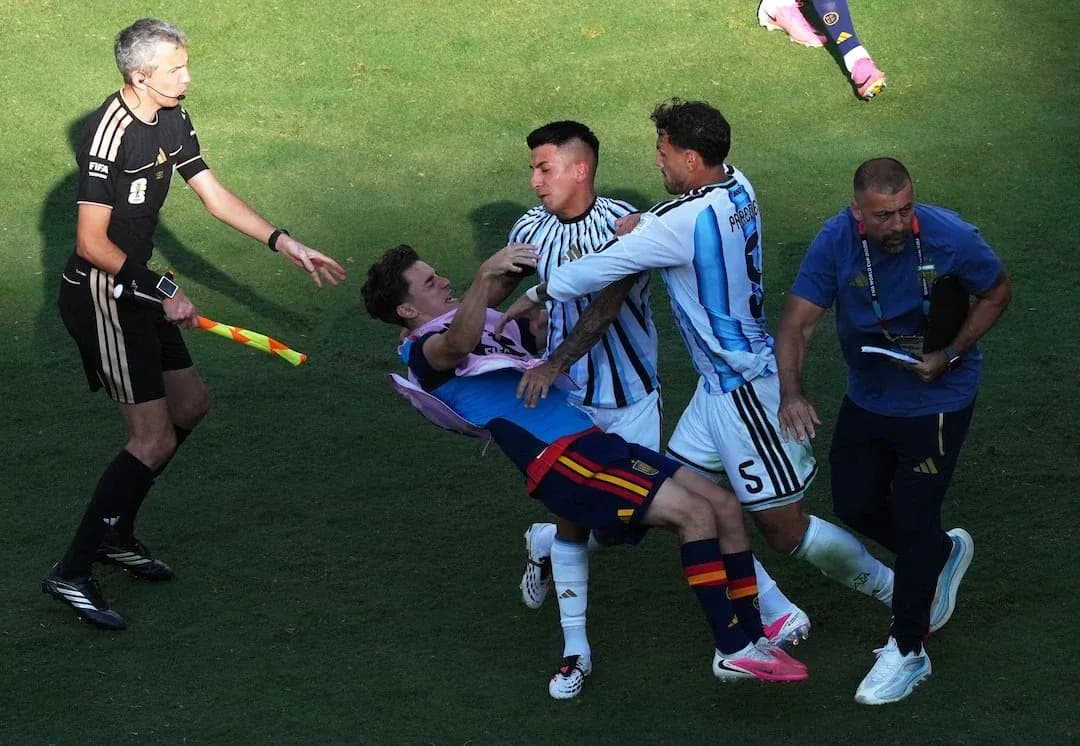
Discipline became a late factor in Ecuador’s collapse of control. After Alan Franco’s first-half yellow, the second half saw a flurry in added time: Kendry Páez was booked at 90+3' for “Tripping”, Piero Hincapié received a red card at 90+5' for “Unsportsmanlike conduct”, and Moisés Caicedo was shown a yellow at 90+9', again for “Tripping”. The final tally – Ecuador 3 yellow cards and 1 red, Mexico no cards – underlined how Beccacece’s side lost composure as they chased the game.
Statistical Overview
Statistically, the contest was closer in expected terms than the 2-0 score suggests. Mexico’s xG of 1.02 versus Ecuador’s 0.73 points to a match of relatively few clear-cut chances, decided by Mexico’s superior exploitation of transition moments and clinical first-half finishing. Mexico’s 15 total shots to Ecuador’s 7, and a 10–5 edge in shots inside the box, highlight how Aguirre’s plan to concede some territory but win the most dangerous spaces paid off. Ecuador’s higher possession and passing accuracy did not translate into penetration, with Mexico’s defensive index on the night defined by compactness, well-timed fouls, and an error-free display from the back four in front of Rangel (Mexico).
In synthesis, this was a tactically mature performance from Mexico: a controlled 4-3-3 that turned defensive solidity and vertical attacks into a comfortable Round of 32 progression, while Ecuador’s 4-4-2, though tidy in build-up, lacked the structural tools and composure to break down a disciplined block once two goals behind.