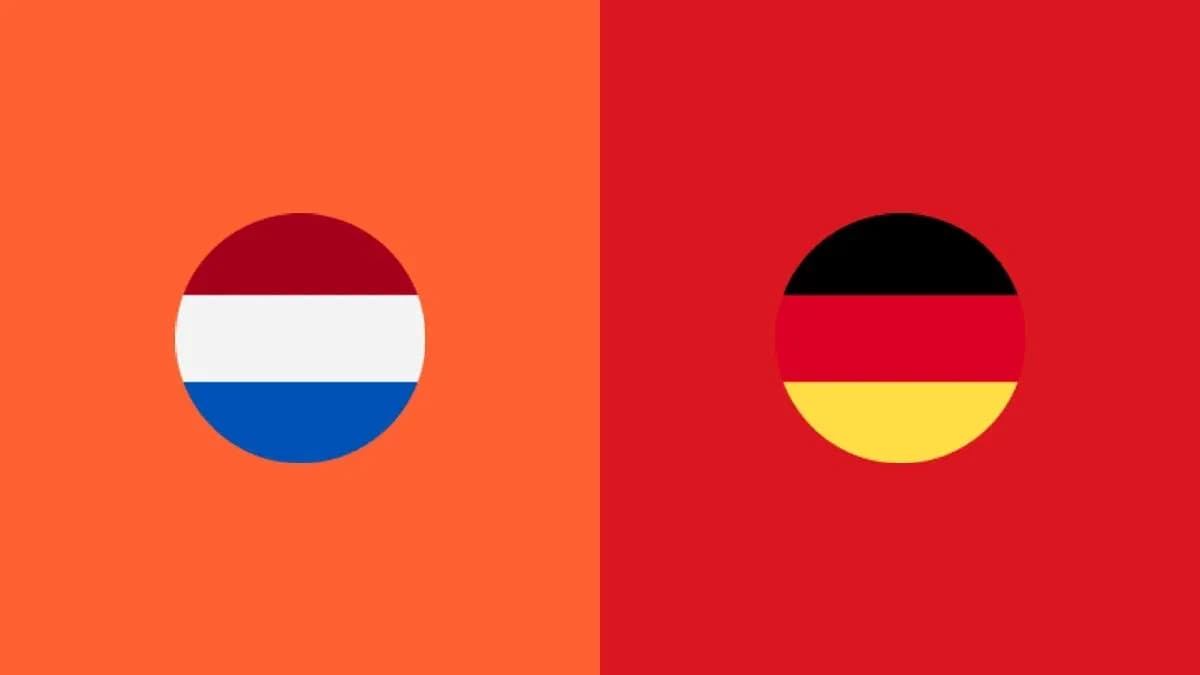
Netherlands vs Germany: New Managers Clash in Amsterdam
Two giants, two new bosses, one unforgiving stage.
Netherlands vs Germany kicks off on 24 September 2026 at 14:45 EST, 18:45 GMT in Amsterdam, with the UEFA Nations League serving as the launchpad for two of the most intriguing managerial reigns in international football.
Xavi’s Oranje, Without Memphis
The Netherlands arrive with a new face in the dugout and a bold statement on the teamsheet.
Xavi, the iconic former Spain midfielder, has taken over from Ronald Koeman after Oranje’s World Cup exit to Morocco. His first major decision is a shocker: Memphis Depay, the country’s all-time leading scorer, is out of the squad.
No injury excuse. No suspension. Just a clean tactical call from a coach who clearly wants to reshape this side in his own image.
On the pitch, the structure looks familiar but the emphasis may not. The projected XI is a 4-3-3 packed with energy and technical quality:
Netherlands (4-3-3): Bart Verbruggen; Denzel Dumfries, Virgil van Dijk, Micky van de Ven, Nathan Ake; Ryan Gravenberch, Joey Veerman, Tijjani Reijnders; Jeremie Frimpong, Brian Brobbey, Cody Gakpo.
No injuries or suspensions are currently listed for the Dutch, giving Xavi a full deck to play with as he starts to redraw the blueprint.
One name jumps off the page: Brian Brobbey.
The powerful striker has been in the headlines after a hat-trick for Sunderland in a wild 5-3 defeat to Manchester City, and he bullied Arsenal’s back line in another recent outing. He’s raw, direct, and relentless. Germany will know exactly what’s coming. Stopping it is another matter.
Klopp’s Germany: High Energy, High Stakes
On the other bench, a very familiar figure takes charge of a very different Germany.
Jürgen Klopp, the Liverpool legend, has replaced Julian Nagelsmann after Germany’s World Cup ended with a 1-1 draw against Paraguay and elimination in the knockouts. The job now is not just to win; it’s to reconnect a football nation with its team.
Klopp has wasted no time putting his stamp on things. He has named two separate 22-man squads to navigate four Nations League fixtures against the Netherlands, Greece (twice), and Serbia, a rotation-heavy approach that screams intensity and experimentation.
For Amsterdam and the first Greece game, the group reads like a blend of established quality and fresh opportunity: Marc-André ter Stegen, Alexander Nübel, Finn Dahmen, Hennes Behrens, Max Rosenfelder, Philipp Treu, Jonathan Tah, Nico Schlotterbeck, Nathaniel Brown, Josha Vagnoman, Yann-Aurel Bisseck, Joshua Kimmich, Nadiem Amiri, Yannik Engelhardt, Felix Nmecha, Anton Stach, Bambasé Conté, Kai Havertz, Chris Führich, Jamal Musiala, Lennart Karl, Younes Ebnoutalib, Serge Gnabry, Kevin Schade.
Yet the starting XI, at least on paper, looks relatively settled:
Germany (4-2-3-1): Alexander Nübel; Nathaniel Brown, Jonathan Tah, Nico Schlotterbeck, Joshua Kimmich; Felix Nmecha, Nadiem Amiri; Serge Gnabry, Lennart Karl, Jamal Musiala; Kai Havertz.
Ter Stegen is back after serious injury and finally stands on the brink of being Germany’s undisputed number one. He has spent years in Manuel Neuer’s shadow, but for now he still has to dislodge Nübel, the Besiktas goalkeeper projected to start in Amsterdam.
No injuries or suspensions cloud Klopp’s selection. Every omission is a choice, not a necessity.
Form Lines and Fine Margins
The Netherlands come into this one with three wins, a draw, and a loss from their last five competitive matches. Their World Cup story captured their contradictions: a commanding 5-1 demolition of Sweden on one hand, and a 1-1 draw with Morocco that ended their campaign on goal-difference terms on the other.
Eleven goals scored, six conceded across those five games. Plenty of threat, but cracks at the back that a side like Germany will look to rip open.
Germany’s recent run is more volatile. Two wins, two defeats, and that costly 1-1 with Paraguay at the World Cup that ended their tournament. They smashed Curacao 7-1, edged Ivory Coast 2-1, but fell to Ecuador and then Paraguay when it really mattered. Thirteen goals scored, five conceded across five outings underline their attacking firepower – and the danger of leaving the back door open.
Jamal Musiala arrives in sharp form. The Bayern Munich playmaker has three goal contributions in his last three games for his club and looks set to be the creative heartbeat of Klopp’s new era. If anyone can exploit the spaces between Van Dijk and the Dutch midfield, it’s him.
Selection Problems and Opportunities
Both managers have had to adjust, but only one has been hit by late withdrawals.
For the Netherlands, Justin Kluivert and Donyell Malen have pulled out through injury. Xavi still has depth, yet those absences strip some pace and directness from his attacking options off the bench.
Germany have lost Brajan Gruda from the squad, a minor setback in a group that already leans on the likes of Gnabry, Havertz, Musiala, and Schade for cutting edge.
The tactical battle feels clear. Xavi’s side will look to control zones with a technical midfield of Veerman, Gravenberch, and Reijnders, while Frimpong and Gakpo stretch the game wide and Brobbey pins centre-backs in place. Germany, with Kimmich at full-back, will try to build cleanly from deep, use Nmecha and Amiri to connect the thirds, and unleash Gnabry and Musiala between the lines with Havertz drifting into pockets.
One slip in concentration either way, and this match can tilt quickly.
Old Rivalry, New Chapter
The history between these two adds an extra charge to the evening.
Their last meeting, in October 2024, ended in a 1-0 win for Germany in the Nations League. A month earlier, in September 2024, they shared a 2-2 draw in the same competition in the Netherlands. Across the last five head-to-head clashes, Germany have two wins, the Netherlands one, with two draws. Eleven goals between them in that span tell you one thing: these games rarely drift.
The table raises the stakes. In UEFA Nations League Group 2, Germany sit top. The Netherlands are third. The hosts need a result to drag themselves into the thick of the fight; Germany can tighten their grip on the group with a statement away performance.
Two nations rebuilding. Two icons on the touchline. A rivalry that never really cools.
In Amsterdam, on 24 September, we find out whose new era starts with a roar – and whose begins with questions.