Portugal vs Croatia: World Cup Round of 32 Tactical Analysis
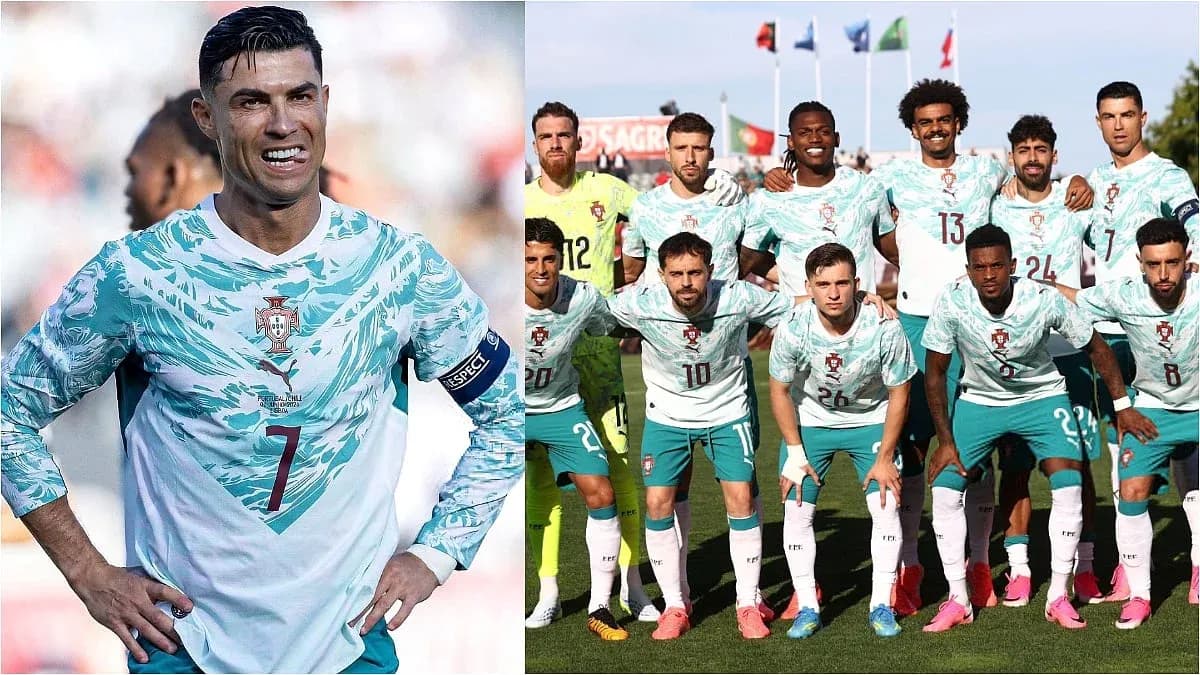
Portugal face Croatia at BMO Field in Toronto in a high‑stakes World Cup Round of 32 tie. Both sides advanced as runners-up from their groups, with Portugal finishing 2nd in Group K on 5 points and a +5 goal difference (6 goals for, 1 against in the group stage), while Croatia came 2nd in Group L with 6 points and a neutral goal difference (5 scored, 5 conceded in the group stage). This knockout game will define whether Portugal’s solid group-stage control or Croatia’s more volatile profile translates into a deep run in 2026.
Head-to-Head Tactical Summary
Recent meetings are frequent and competitive. On 18 November 2024 in Split (Stadion Poljud) in the UEFA Nations League (League A - 6), Croatia drew 1–1 with Portugal, having trailed 0–1 at half-time. On 5 September 2024 in Lisbon (Estádio da Luz) in the UEFA Nations League (League A - 1), Portugal beat Croatia 2–1, leading 2–1 at half-time. On 8 June 2024 in Jamor, Oeiras (Estádio Nacional) in a friendly, Croatia won 2–1 after leading 1–0 at half-time. Earlier, on 17 November 2020 in Split in the UEFA Nations League (League A - 6), Portugal came from a 0–1 half-time deficit to win 3–2. On 5 September 2020 in Porto (Estádio Do Dragão) in the UEFA Nations League (League A - 1), Portugal defeated Croatia 4–1 after leading 1–0 at half-time. The pattern across these five games is of Portugal generally having the higher scoring ceiling, but Croatia repeatedly finding ways to stay in games and occasionally edge them.
Global Season Picture
- League Phase Performance: In the group stage, Portugal’s profile was that of a controlled contender: 6 goals for and only 1 against across 3 matches, yielding 5 points and 2nd place in Group K. Croatia’s path was more open and volatile in Group L: 5 goals scored and 5 conceded over 3 games, yet they collected 6 points to also finish 2nd. Portugal arrive with the more secure defensive base in the group stage, while Croatia’s numbers suggest a higher-risk, higher-variance approach.
- Season Metrics: In the group stage, Portugal’s attacking output has been efficient (6 goals in 3 matches, 2.0 per game) with a strong defensive record (1 goal conceded, 0.3 per game). Their preferred structure is stable, using a 4‑2‑3‑1 in all 3 games, and they have kept 2 clean sheets while failing to score once. Discipline-wise, Portugal’s yellow cards are spread across phases of the game (four yellows, distributed from early to late minutes), but with no reds, indicating controlled aggression. Croatia, also in the group stage, have a more balanced goals profile (5 scored and 5 conceded, 1.7 for and 1.7 against per game), reflecting a more open game model. They have alternated between 4‑2‑3‑1 (twice) and 3‑4‑2‑1 (once), suggesting tactical flexibility but less structural continuity than Portugal. Croatia have 1 clean sheet and have scored in every match, with yellow cards concentrated in the final half hour, pointing to late-game physicality under pressure.
- Form Trajectory: Portugal’s form string “DWD” in the group stage shows an unbeaten run with a draw–win–draw sequence, underlining consistency but also a slight question over their ability to turn control into outright dominance in tight games. Croatia’s “WWL” reflects a strong start with back‑to‑back wins followed by a defeat, indicating higher momentum early in the group but some recent defensive exposure that opponents can target in this knockout setting.
Tactical Efficiency
Across the group stage, Portugal’s efficiency profile is that of a balanced, tournament-ready side: a solid goals-for rate (2.0 per match) combined with a very low concession rate (0.3 per match) points to a compact block behind a structured 4‑2‑3‑1. Their ability to keep 2 clean sheets in 3 games, while still producing a 5‑0 home win as their biggest result, suggests an attack that can accelerate when control is established and a defense that rarely collapses. Croatia’s numbers (1.7 goals scored and 1.7 conceded per match) paint a more unstable picture: they are capable of creating chances and scoring in different setups, but their defensive line has been consistently tested, especially away from home in the group stage where they have conceded 4 of their 5 goals. In a knockout context, this contrast implies that Portugal’s “Attack/Defense Index” would rate higher on defensive reliability, while Croatia’s would lean more towards offensive threat at the cost of defensive risk. The tactical question is whether Croatia’s flexible systems can disrupt Portugal’s stable 4‑2‑3‑1 structure often enough to offset the defensive disparity over 90 minutes.
The Verdict: Seasonal Impact
This Round of 32 clash is a clear inflection point for both national teams’ 2026 narratives. For Portugal, elimination here would feel like an underperformance relative to their dominant group-stage defensive metrics and historically strong head‑to‑head results against Croatia in competitive matches. Progression would validate their controlled, structure‑first approach and set them up as a credible threat for the quarter-finals and beyond, with their low concession rate a foundation for navigating tighter, higher-pressure ties. For Croatia, a win would confirm that their more volatile, attacking‑leaning profile can still deliver in knockout football, reinforcing the value of their tactical flexibility and ability to score in every match. Defeat, by contrast, would underline the cost of their defensive openness and could trigger a shift toward more conservative setups in future major tournaments. In strategic terms, this game is less about group-stage ranking and more about identity: Portugal are playing to confirm themselves as a balanced contender for the later rounds, while Croatia are playing to prove that their risk‑embracing style can still carry them deep into the World Cup bracket.