Premier League International Break: Teams Adjust to Extended Pause
The season has barely found its rhythm and already the music has cut out.
The first international break is here – and this one feels different. Not just another two-week pause that fans grumble through, but a full three-week shutdown for the Premier League and Championship. One long stretch without domestic football.
On paper, it makes sense. The old system split four international fixtures across September and October. Now those games are crammed into one block. Instead of two separate breaks totalling four weeks of disruption, club football disappears once for three. In theory, the calendar gives a week back.
Tell that to the players left behind.
For those not on international duty, three weeks without competitive football is a long time. Too long for elite athletes whose bodies are tuned to the rhythm of games, recovery, and preparation. So clubs have had to improvise.
And they’re doing it in very different ways.
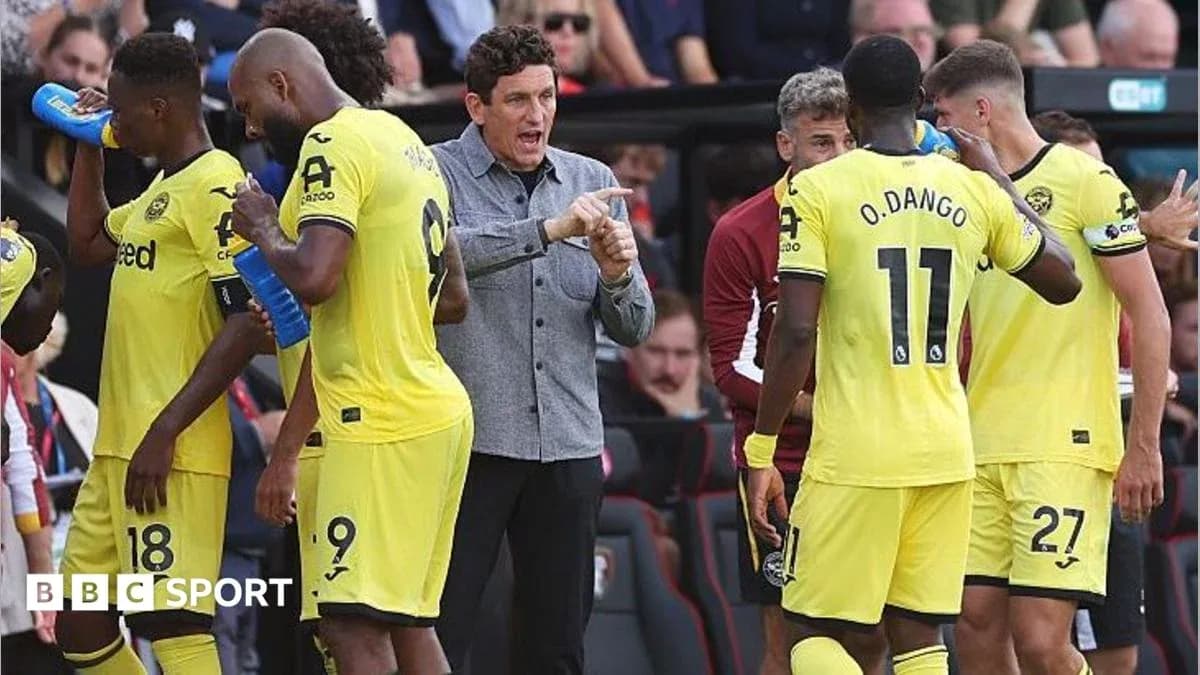
Brentford: A Week Off, Then Back to Work
At Brentford, the training ground is quieter than usual.
Most of the Bees’ squad are away with their countries. Around a dozen players remain, including Callum Wilson and Igor Thiago, plus five returning from injury. They also have one of the longest pauses of all: they played early, hosting Chelsea on a Friday night, and now stare at a sizeable gap.
Keith Andrews has chosen to hit reset. His first-team players have been given a week off, armed with individual training programmes. They’re free to leave the country if they wish, though long-haul trips are unlikely to get the green light.
The break won’t drift. The squad will regroup on Saturday, 26 September, when the serious work begins again. On the weekend of 3 October, Brentford plan a behind-closed-doors friendly against another English club.
That match could mark a quiet turning point. It may offer Nathan Collins and Sepp van den Berg a route back onto the pitch, with the rest of the squad likely fleshed out by under-21s.
The second international window will feel very different in west London. Brentford play Brighton on Sunday, 8 November, then are back at it against Everton on Saturday, 21 November. No three-week void this time. Players might get the odd day off, but the schedule will be much closer to business as usual. No extra friendly, just the standard build-up to the Toffees.
Liverpool: Threadbare but Relentless
Liverpool’s approach is simpler, if less glamorous.
With the bulk of their squad scattered across the globe, Andoni Iraola will keep working with the small group that stays behind. There will be a few days off, but no grand reset, no overseas trip.
Iraola has already done the maths. When the internationals return, he expects “no more than three days probably to prepare” for a home game against Manchester City on 11 October.
Three days to get everyone back, recover, reconnect, and then face the champions. The clock will be ticking the moment the last player walks back through the door.
Aston Villa: Emery Goes Home
At Aston Villa, the break has a different feel entirely.
Unai Emery is heading back to familiar territory. Villa will travel to Spain to face Sevilla in the 15th edition of the Antonio Puerta Trophy on Friday, 2 October.
For Emery, it is a return to the club where he lifted the Europa League three times in a row. For Sevilla, the fixture is something else entirely – a tribute to Antonio Puerta, the 22-year-old wing-back who died on 28 August 2007 after suffering multiple cardiac arrests during a La Liga match against Getafe.
While other Premier League squads are stripped bare by international call-ups, Villa will use this match as a competitive tune-up and an emotional occasion rolled into one. It’s not just another friendly. It’s a reminder of football’s fragility, played in a stadium that knows Emery well.
Championship Clubs: Time to Heal and Learn
Drop down a division and the picture changes.
Championship squads are not hit as hard by international call-ups. Many clubs lose only a handful of players. Blackburn Rovers, for example, have just four away.
For Tony Mowbray, that’s not a problem. It’s an opportunity.
Blackburn’s season started under a cloud of injuries, with more than 10 players ruled out in the opening weeks. The break gives them breathing space. Players like Gady Beyuku and Moussa Baradji, who have only just returned, can be eased back in. Others, such as Scott Wharton, edge closer to full availability.
After their trip to Portsmouth on Saturday, Rovers headed back to Lancashire. A few days on the training ground this week will follow, a chance to reset after a hectic spell of league fixtures and Carabao Cup ties.
It also gives Mowbray, back at the club since the summer, time he rarely gets mid-season: uninterrupted sessions to drill his ideas, shape his team, and build cohesion.
But it will not be a boot-camp slog. Mowbray plans to give his players a few days off at the end of the week. Some, like Yuri Ribeiro, will be able to head home to Portugal if they choose.
The pattern will repeat. Training early in week two, then another short weekend break. Week three returns to the usual pre-match routine ahead of a home game against Cardiff.
Behind the scenes, Blackburn are also trying to line up a behind-closed-doors friendly against a Premier League or League One side. That game will be crucial for players returning from injury and for those on the fringes, keeping legs sharp and minds engaged.
When the shorter, two-week international break comes around in November, the approach will be tweaked. Players may still get a brief rest, but friendlies then are more likely to be in-house, with senior and under-21 players mixed together.
League One: Playing Through the Gaps
League One has its own quirks.
The division carries on during international breaks unless a club has three call-ups that meet the EFL’s criteria, in which case they can request a postponement. This time, only four of the 12 scheduled league matches have survived on each of the two affected weekends.
Clubs saw this coming.
Many moved early to plug the gaps by scheduling Football League Trophy fixtures across these three weeks. That competition usually prompts rotation anyway, so those games can go ahead even if league matches are postponed. For managers, it’s a useful tool: competitive minutes without overloading the same core group.
Twelve teams will play twice in the Trophy during this spell. Ten more will play once.
That left just Leyton Orient and Reading in danger of having nothing at all on the calendar. In the end, both clubs have only had one league match postponed, so neither will be stuck with a completely empty three-week stretch.
The calendar has been bent, not broken. One longer international window, fewer interruptions later. Some managers will love the clean block of training time. Others will worry about rhythm, rust, and players returning from far-flung duty with only days to spare.
When the Premier League roars back into life and the Championship resumes its grind, we’ll find out who used this strange, stretched-out pause best.