Sweden Dominates Tunisia 5-1 in Group F Match
Sweden 5-1 Tunisia at Estadio BBVA opened Group F with a statement win that propels Sweden to 6 points from two games and consolidates their position at the top of the group, while Tunisia remain bottom on 0 points and a worsening goal difference that leaves their qualification hopes hanging by a thread.
Match Report
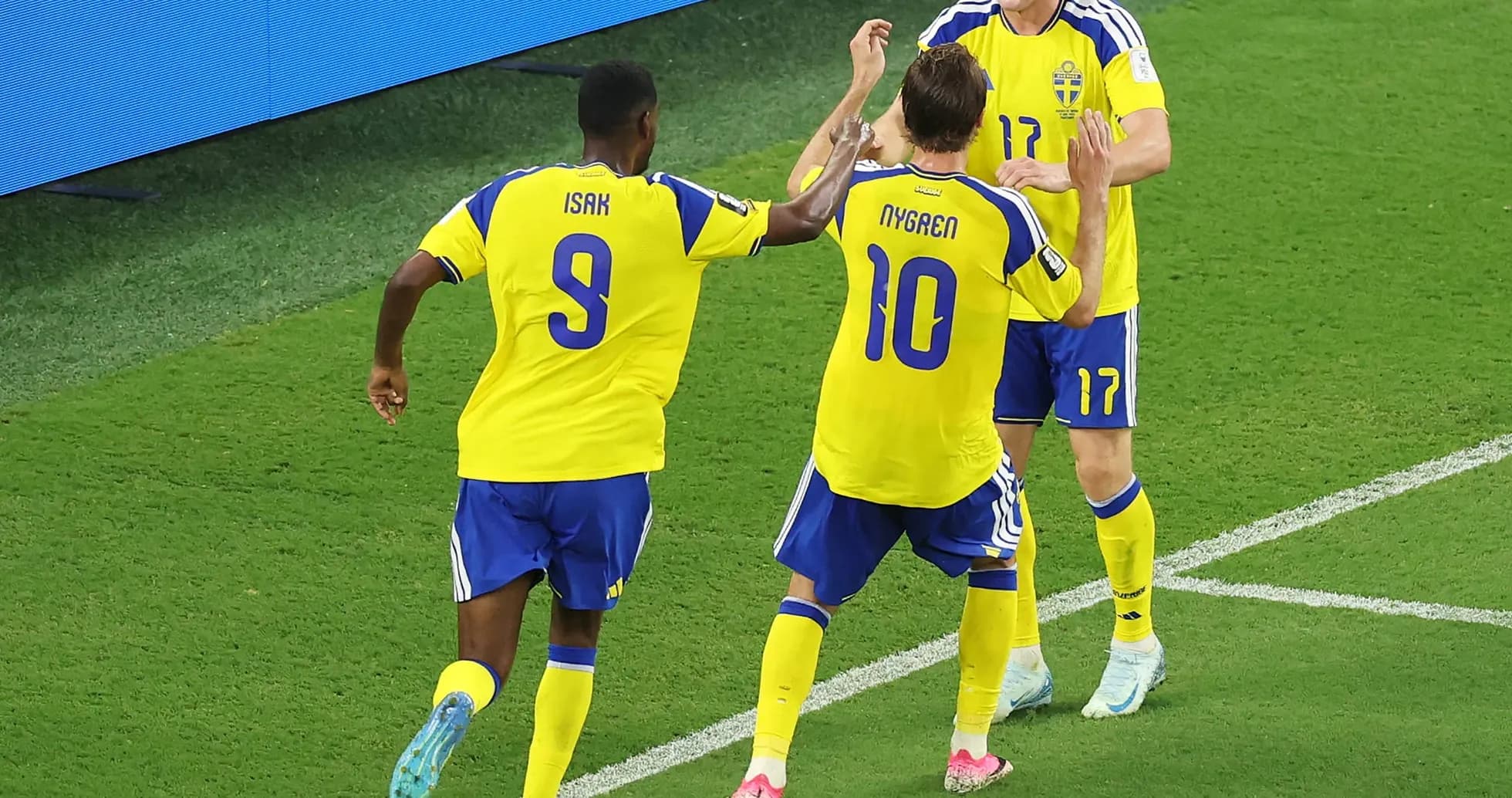
The game ignited early. In the 7th minute, Sweden struck first: Sweden goal — Yasin Ayari finished a loose ball in the box with an unassisted effort to make it 1-0. Sweden controlled the tempo and doubled their lead on the half-hour. In the 30th minute, Sweden goal — Alexander Isak (assisted by Viktor Gyökeres) clinically converted a transition move to push the score to 2-0.
Tunisia responded before the interval. In the 43rd minute, Tunisia goal — Omar Rekik (assisted by Hannibal Mejbri) headed in from a set-piece situation, halving the deficit to 2-1 and shifting the momentum going into half-time.
Early in the second half, Tunisia’s aggression was punished. In the 54th minute, Rani Khedira (Tunisia) — yellow card (Tripping) — was booked for a late challenge as Tunisia tried to press higher and disrupt Sweden’s build-up.
Sweden then reasserted control on the scoreboard. In the 59th minute, Sweden goal — Viktor Gyökeres (assisted by Alexander Isak) finished a sharp move through the inside-left channel, restoring a two-goal cushion at 3-1.
Fresh legs followed for Sweden in the 65th minute. Elliot Stroud replaced Gabriel Gudmundsson (Sweden), and moments later at the same time mark, Lucas Bergvall replaced Benjamin Nygren (Sweden), with Graham Potter adding energy and control in midfield and on the flanks.
Tunisia responded with a triple change in the 72nd minute to chase the game. Sebastian Tounekti replaced Elias Saad (Tunisia), Mohamed Belhadj Mahmoud replaced Yan Valery (Tunisia), and Elias Achouri replaced Ellyes Skhiri (Tunisia), as Sabri Lamouchi moved to inject pace and more attacking profiles.
As Tunisia pushed, they reshaped again late on. In the 83rd minute, Ismael Gharbi replaced Rani Khedira (Tunisia), removing the booked holding midfielder for a more offensive option. A minute later, in the 84th minute, Firas Chaouat replaced Anis Ben Slimane (Tunisia), committing even more bodies forward.
Sweden used that same 84th minute to refresh their own midfield pivot. Mattias Svanberg replaced Jesper Karlström (Sweden), and the substitute made an instant impact. In the 84th minute, Sweden goal — Mattias Svanberg (assisted by Alexander Isak) arrived on the edge of the area to finish a cut-back, stretching the lead to 4-1 and effectively killing the contest.
In stoppage time, Sweden managed minutes and preserved key attackers. In the 90+1' minute, Anthony Elanga replaced Alexander Isak (Sweden), and Daniel Svensson replaced Alexander Bernhardsson (Sweden), ensuring fresh legs to see out the game.
Sweden still found time for a fifth. In the 90+6' minute, Sweden goal — Yasin Ayari (assisted by Lucas Bergvall) capped a late counter with a composed finish from the right side of the box, sealing a dominant 5-1 scoreline.
Fixture Statistics & Tactical Audit
- xG: Sweden 1.36 vs 0.28 Tunisia
- Possession: Sweden 49% vs 51% Tunisia
- Shots on Target: Sweden 7 vs 2 Tunisia
- Goalkeeper Saves: Sweden 1 vs 1 Tunisia
- Blocked Shots: Sweden 3 vs 1 Tunisia
The 5-1 scoreline outstripped the underlying xG margin (1.36 vs 0.28), underlining how ruthlessly Sweden converted their chances (7 shots on target for 5 goals) against a Tunisia side that allowed high-quality looks despite edging possession. Sweden were efficient rather than territorially dominant, using their 49% of the ball to attack vertically through Isak and Gyökeres, while Tunisia’s 51% possession yielded only 2 shots on target and a low xG, reflecting sterile control and limited penetration. Defensively, Sweden’s compact back three and screening midfield forced Tunisia into low-probability efforts from outside the box, and the Scandinavian side repeatedly exploited Tunisian structural risk once Lamouchi opened up the shape in the final 20 minutes.
Standings Update & Seasonal Impact
Sweden’s emphatic win adds three more points to their tally, moving them to 6 points, with 10 goals scored and 2 conceded, for a goal difference of +8 at the top of Group F. With such a strong goal difference buffer and back-to-back victories, they are firmly on course for the Round of 32 and now have margin for error in the final group fixture. Tunisia, by contrast, remain on 0 points, still stuck on 1 goal scored and now with 10 conceded, dropping to a goal difference of -9 at the foot of the group. The gap to the qualification places is now at least six points, meaning Tunisia will likely require both a big win in their final match and favourable results elsewhere to have any realistic chance of progressing.
Lineups & Personnel
Sweden Starting XI
- GK: Kristoffer Nordfeldt
- DF: Gustaf Lagerbielke, Isak Hien, Victor Lindelöf
- MF: Jesper Karlström, Alexander Bernhardsson, Benjamin Nygren, Yasin Ayari, Gabriel Gudmundsson
- FW: Viktor Gyökeres, Alexander Isak
Tunisia Starting XI
- GK: Abdelmouhib Chamakh
- DF: Yan Valery, Omar Rekik, Montassar Talbi, Amine Ben Hmida, Ali Abdi
- MF: Rani Khedira, Ellyes Skhiri, Hannibal Mejbri
- FW: Elias Saad, Anis Ben Slimane
Post-Match Verdict
This was a clinical Sweden display in both boxes (7 shots on target yielding 5 goals) built on compact defensive structure and devastating transitions. Potter’s 3-1-4-2 maximised the vertical running of Isak and Gyökeres, who combined for a goal and three assists, and the bench contributed decisively with Svanberg and Bergvall directly involved in late goals. Tunisia’s collapse was primarily defensive: despite holding 51% possession, they allowed 13 total shots, 9 inside the box and 3 blocked, while creating only 6 efforts themselves and a meagre 0.28 xG. Once they chased the game with aggressive substitutions, their back line lost cohesion, and Sweden repeatedly attacked the spaces behind the wing-backs. The result underlines Sweden’s status as group favourites and exposes Tunisia’s structural fragility against high-tempo, transition-focused opponents.