Thomas Tuchel's Gamble: England's World Cup Collapse Against Argentina
Thomas Tuchel came to this World Cup as England’s gambler-in-chief. He picked a squad few others would have dared to assemble, leaned into chaos, trusted instinct over orthodoxy. A backs-to-the-wall win over Mexico with 10 men. A semi-final start for Morgan Rogers based on what he called “a feeling from the coach”.
For a while, the bets looked inspired. Then one of them blew up England’s World Cup.
The night had the feel of something different, something historic. England had Argentina where they wanted them. When Anthony Gordon arrived at the back post to turn in Rogers’ cross, it felt like the latest vindication of Tuchel’s gut. The winger he backed on a hunch, the forward he promoted on faith, combining to put England 1-0 up on the world champions.
The stadium crackled. The first draft of a famous win was being written.
Seven minutes from the end, it was in shreds.
The turning point
The game’s hinge moment came not with a Messi pass or a Martinez finish, but with a substitution board in the 71st minute.
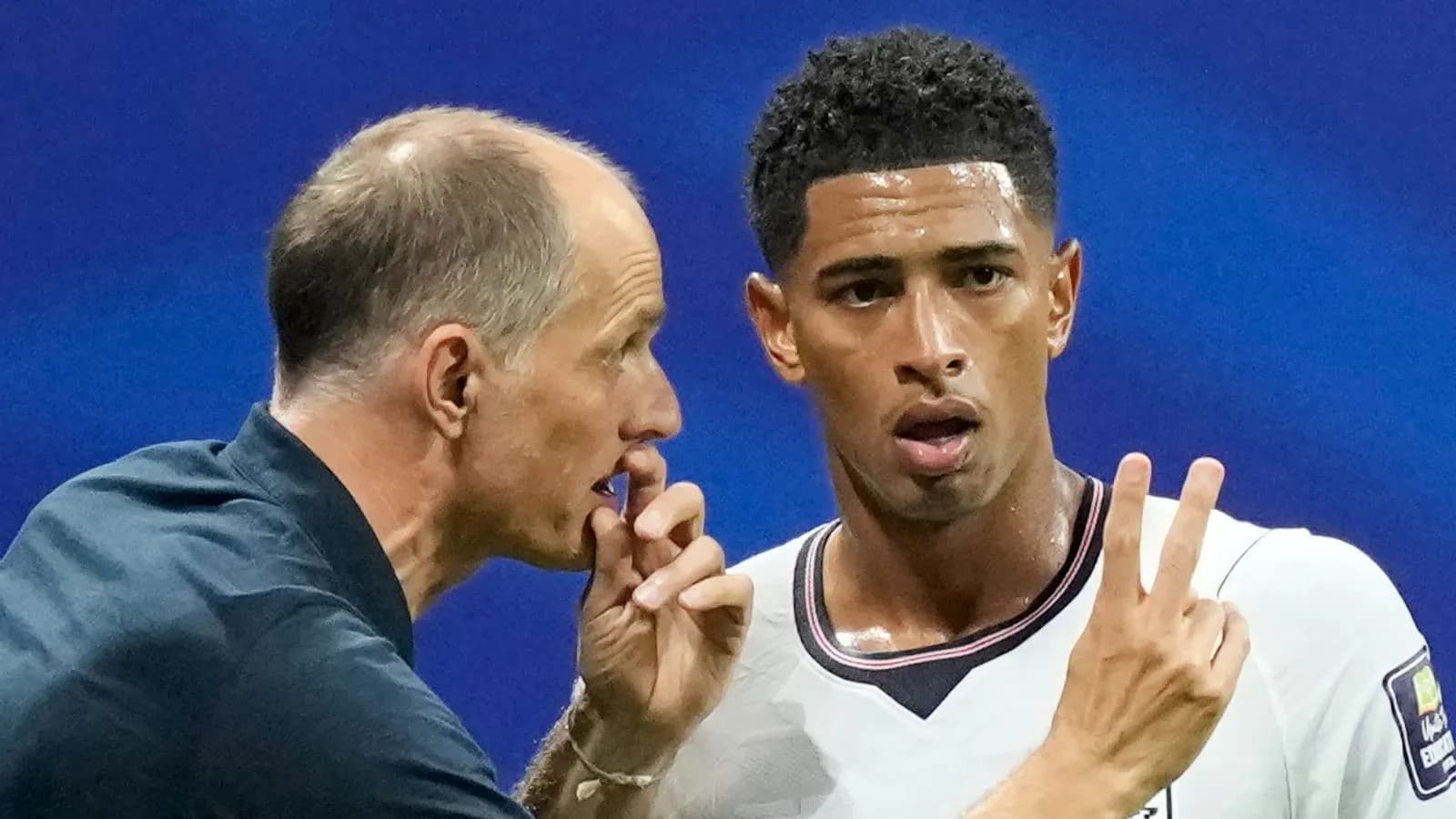
Gordon’s number went up. Ezri Konsa came on. England dropped into a back five against the reigning champions with more than 20 minutes still to play.
It is easy to savage in hindsight. It felt wrong in real time.
History had already warned England. They have now scored first in seven of the 13 knockout ties they have lost over the last 30 years. They are the only side this century to lead in a World Cup semi-final and fail to reach the final. They have now done it twice.
The pattern was painfully familiar. After Gordon’s goal, England saw just 17 per cent of the ball in the next 15 minutes and had only nine touches in the Argentina half. The freeze was creeping in, but Argentina still had not truly worked Jordan Pickford, aside from a Nico Gonzalez header.
Tuchel could have read that as a warning to push higher, to give his team an out ball, to keep Argentina honest. Instead, he doubled down on retreat.
Konsa’s arrival did not just signal a tactical tweak. It stripped England of their most direct threat. Gordon, who had stretched Argentina with his running and offered an escape route, was gone. The message to his team, and to Argentina, was unmistakable: hold what we have.
They never did.
England retreat, Argentina rise
On paper, the 3-4-3 made sense. Tuchel has built a career on it, trusting wing-backs to carry his sides up the pitch. The idea, presumably, was for Djed Spence and Reece James to surge forward, to turn defence into counter-attack.
On grass, it never materialised.
From the moment Konsa came on to the moment Lautaro Martinez broke English hearts, England’s numbers fell off a cliff. Their share of the ball in that 21-minute spell dropped to 7.2 per cent. They managed eight touches in Argentina’s half. They did not put in a single cross.
Spence and James, the supposed outlets, touched the ball just once between them in the Argentina half for the rest of the game.
Instead of springing out, England sank back. They handed the ball to a side built on possession, with the best player of all time prowling between the lines, desperate to dictate.
Wave after wave of Argentina attacks followed Konsa’s introduction. England could not keep the ball and, crucially, they could not win it back either. Konsa did not regain possession once. He lost it five times.
Rogers, who had been so influential in the opening hour and had just delivered the assist for Gordon’s goal, was pushed into a notional role behind Harry Kane alongside Jude Bellingham. In reality, he disappeared. Between the formation change and Martinez’s winner, Rogers had a single touch.
This was not just a tactical adjustment. It was a psychological one. England’s anxiety deepened, their line retreated, their passes shortened or simply vanished. Argentina smelled fear and pushed harder. Lionel Messi, quiet by his standards for long stretches, suddenly had the game in his hands. He turned provider for both goals, the architect of England’s collapse.
Tuchel’s freeze
Tuchel has built a reputation as a coach who reads games quickly and is willing to tear up his own plan if it isn’t working. He did it at half-time against Croatia in the quarter-final with a rousing team-talk and bold attacking changes. He did it with a perfectly timed defensive reshuffle at the Azteca to see off Mexico with 10 men.
Not here.
As England shrank into their own third and Argentina’s pressure became relentless, Tuchel did not rip up the script. He brought on Dan Burn and Nico O’Reilly, changes that hinted at fatigue management and damage limitation rather than a desperate attempt to wrest back control.
The contrast with Mexico was stark. That night, England were facing a side intent on slinging cross after cross into the box. A deep block, aerial strength, and a compact shape made sense.
Argentina were never going to play that way. This is a team built on angles and combinations, on Messi stepping in off the right to slide passes into runners. Giving them the ball and inviting them onto the edge of your area is not pragmatism. It is an invitation.
Tuchel, perhaps, was emboldened by the Mexico escape. Belief in his structure, in his defensive organisation, in his ability to shut down a game. Against these opponents, with this playmaker, it was a gamble too far.
He had been hired to push England beyond the plateau of the Gareth Southgate years. Under Southgate, England beat the sides they were expected to beat and fell short as underdogs against the elite. Tuchel was supposed to change that storyline, to add tactical edge and in-game bravery to a talented generation.
On this evidence, the script remains stubbornly familiar.
The irony that will linger
In time, the positives of this campaign will be revisited. The daring call to back Rogers. The half-time reset against Croatia. The controlled defiance in the Azteca. There were flashes that suggested Tuchel’s in-game management might be the missing piece that Southgate could never quite find.
Tuchel has already committed to stay, signing a two-year extension that carries him through to Euro 2028. He will have another shot with this group, another tournament to prove that his boldness can be harnessed, not just in selection but in the most pressurised minutes of the biggest games.
Until then, one image will endure: the board going up with Gordon’s number, Konsa jogging on, England stepping back.
Tuchel arrived promising to move England away from fear, to leave behind the instinct to cling to a lead and defend first. In the defining moments of a World Cup semi-final, he reverted to exactly that.
That, more than any missed chance or Messi masterclass, is what will haunt him – and England – over the next two years.