Golden Boot Race: Messi, Mbappe, and Haaland Lead the Charge
“Sometimes in football, you have to score goals.”
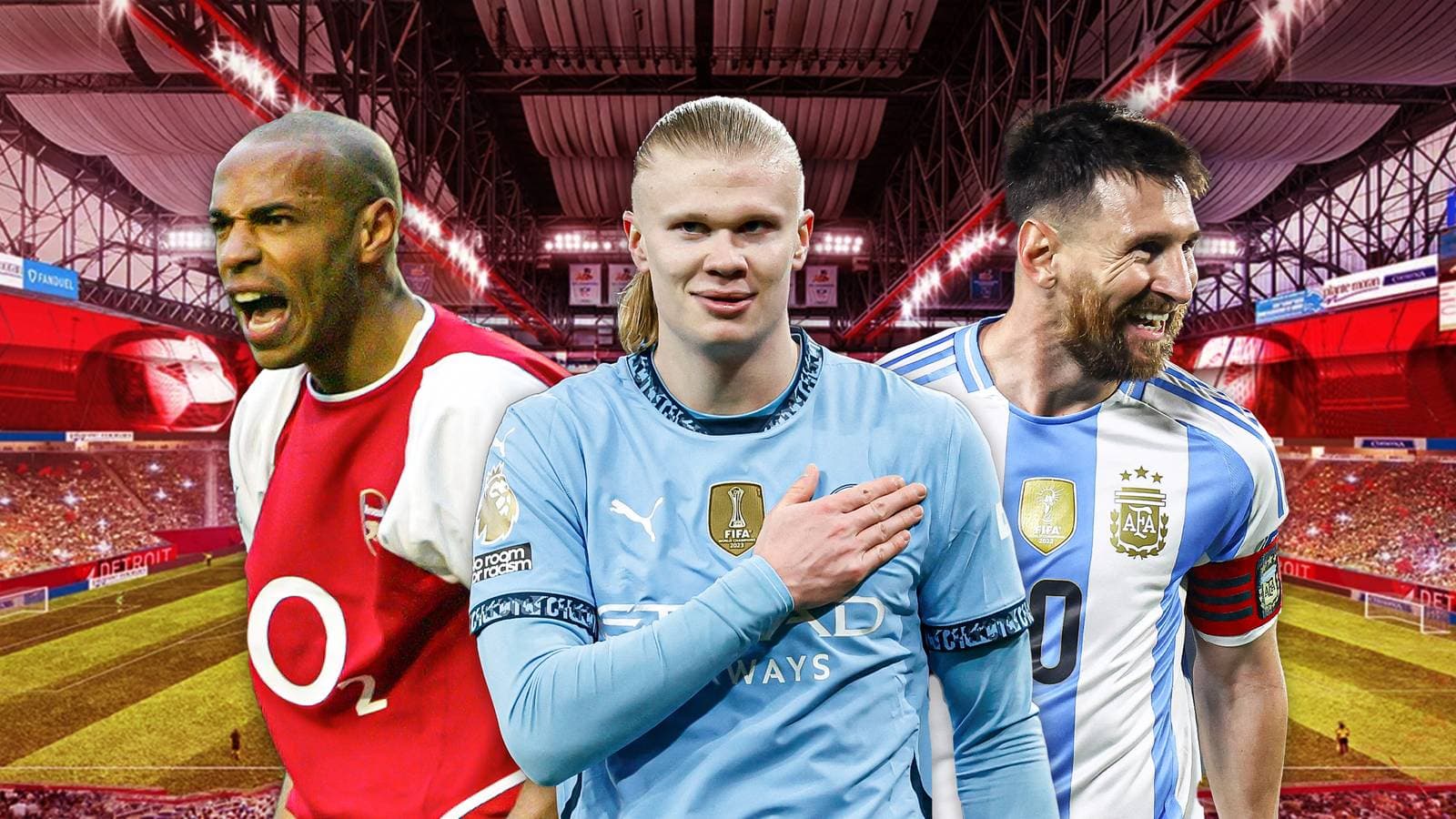
Thierry Henry tossed that line out in 2008. Eighteen years on, with only four games left at the 2026 World Cup, it reads less like a quip and more like the tournament’s central law.
The trophy is the prize everyone came for. But just beneath that, pulsing through every knockout tie, runs another race: the Golden Boot. No one has touched Just Fontaine’s 13-goal avalanche from 1958, yet with 16 extra teams, 40 extra matches and attacking football everywhere you look, this World Cup has turned into a striker’s paradise.
And the numbers at the top are absurd.
How the Golden Boot is decided
The rules are ruthless.
Since 1992, when players finish level on goals, assists decide the ranking. That was the case in 2010, when David Villa, Diego Forlan and Wesley Sneijder all finished on five goals alongside Thomas Muller. Muller walked away with the Golden Boot because he had three assists; the others managed just one each.
In 2006, FIFA added another layer: if goals and assists are tied, the award goes to the player who needed fewer minutes to score them. No shared prizes. No sentiment. You either outscore, out-create or outpace your rivals.
It matters this year more than ever.
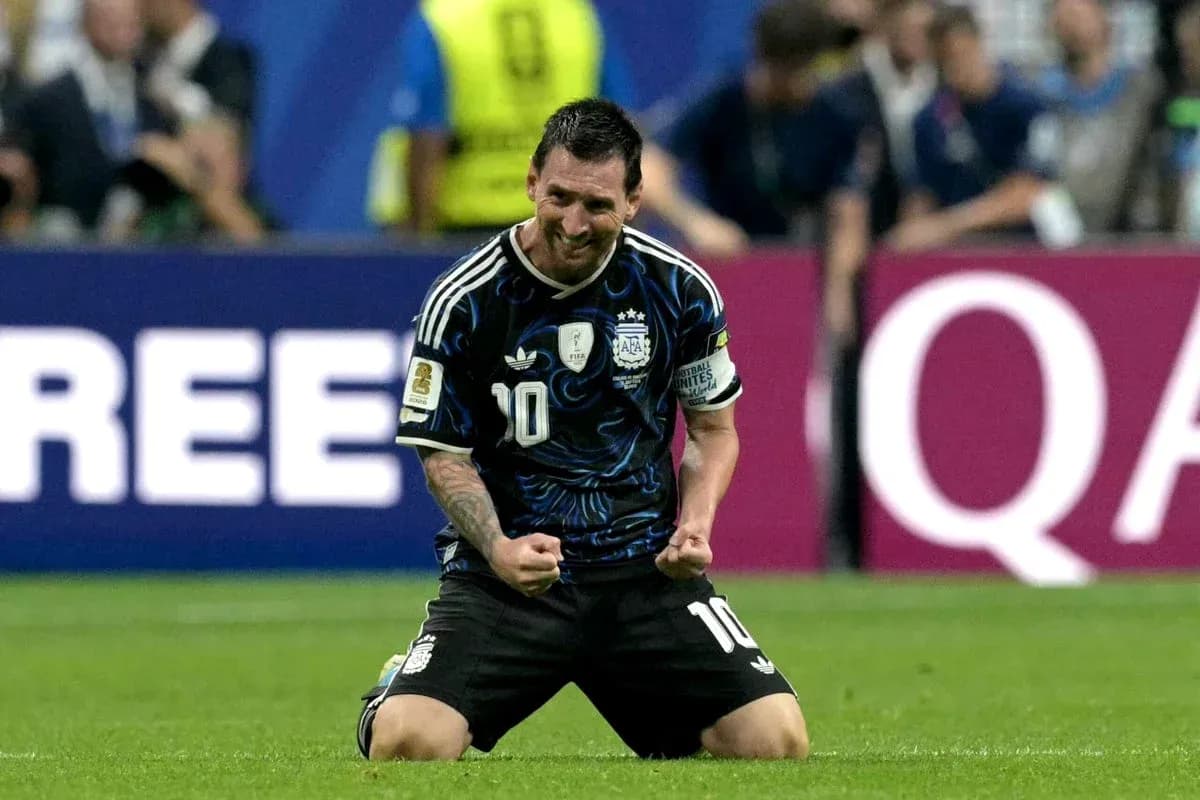
1. Lionel Messi (Argentina) – 8 goals
(4 assists – 712 minutes)
Messi opened his World Cup with a false start. He thought he had his first against Algeria, only for VAR to wipe it out for offside. When the moment came again, he didn’t ask twice. Drifting in from the right, he whipped a 20-yard strike into the corner, the kind of finish that has followed him from Barcelona to Paris to Miami.
After the break, he was there again, alive to the mistake when Luca Zidane spilled Alexis Mac Allister’s low drive. One touch, one simple finish, 2-0. The hat-trick was pure Messi theatre: a curling effort from the edge of the box, shaped as if he were passing to a teammate behind the goal. Zidane could only watch it sail past.
His fourth arrived against Austria, only after he had already missed a penalty. Facundo Medina fizzed the ball into him, and Messi, without breaking stride, finished first time. That goal pushed him clear as the men’s World Cup all-time leading scorer. He then added a fifth late on, pouncing on a blocked shot to stab in from close range.
He didn’t even start Argentina’s final group game against Jordan. It didn’t matter. With 10 minutes to go, he stepped up and swept in a free kick to keep his tally climbing. Goal seven came in the round-of-32 win over Cape Verde; goal eight was pure drama, a late equaliser against Egypt that kept Argentina alive and Messi squarely in command of this race.
Eight goals. Four assists. Over 700 minutes on the pitch. At 39, he is still bending tournaments to his will.
2. Kylian Mbappe (France) – 8 goals
(3 assists – 666 minutes)
Mbappe arrived in North America as the defending Golden Boot winner and started like a man determined to keep it.
He scored twice in France’s opening 3-1 win over Senegal, setting the tone with his usual mix of acceleration and cold-blooded finishing. Against Iraq, he again broke the deadlock, thundering in from range, then returned after a long weather delay in Philadelphia to double the lead.
When the stakes rose, he kept swinging. Two clinical goals against Sweden in the round of 32. A penalty against Paraguay. Another strike in the quarter-final against Morocco. Every time France needed a spark, Mbappe stepped into the spotlight.
Spain finally shut the door on him in the semi-final, holding him scoreless in a 2-0 defeat that ended France’s title hopes. His World Cup will finish in the third-place play-off on Saturday. Eight goals, three assists, fewer minutes than Messi.
If he scores, or even just creates one more, the tiebreakers could flip. The margins are that thin.
3. Erling Haaland (Norway) – 7 goals*
(0 assists – 537 minutes)
Erling Haaland’s first World Cup did not ease him in gently. He tore into it.
Two goals against Iraq in Norway’s opener set the tone. The first was textbook Haaland: a sliding finish from inside the six-yard box, meeting David Moller Wolfe’s low cross from the left. The second came from sheer force of will, as he charged down the goalkeeper and forced the ball over the line.
Senegal felt the full weight of his finishing next. He swept in calmly in the second half for his third of the tournament, then added a fourth with a clever volleyed effort. By then, defences knew what was coming. They still couldn’t stop it.
His fifth might have been his most important. Norway were level with Ivory Coast in the round of 32 when Haaland appeared in the box again, steering in a late winner for a 2-1 victory.
Then came Brazil. Norway stunned the five-time champions, and Haaland scored twice, his sixth and seventh goals of the tournament. One was expected, the other a surprise, but both carried that same brutal certainty that has defined his club career.
Norway are out, which freezes his tally at seven. No assists, fewer minutes than the two men above him. If Messi and Mbappe stall, the Norwegian’s body of work will still sit there, menacing, as the standard the rest must beat.
4. Jude Bellingham (England) – 6 goals
(1 assist – 574 minutes)
This was supposed to be Jude Bellingham’s World Cup as a midfielder, the conductor in England’s orchestra. He decided to add something else: goals, and plenty of them.
He scored in both of England’s opening group wins, first in the 4-2 victory over Croatia, then again in the 2-0 win over Panama. Late runs, sharp timing, unerring composure. It looked rehearsed. It wasn’t. It was instinct.
When the knockouts began, he simply raised the volume. Two goals against Mexico in the last 32. Two more in the quarter-final against Norway, dragging England forward and up the Golden Boot chart.
He sits above his captain Harry Kane only because he has played fewer minutes, 574 to 627. That detail could prove decisive if they finish level. For now, Bellingham has announced himself as something else entirely: a midfielder who can chase a Golden Boot as well as a World Cup.
5. Harry Kane (England) – 6 goals
(1 assist – 627 minutes)
Harry Kane knows this territory. He won the Golden Boot in 2018. He’s back in the conversation again.
He started this tournament with a brace in the 4-2 win over Croatia, finishing with that familiar economy of movement and precision. Then came the grind. Against Ghana, like the rest of his team-mates, he struggled in a goalless draw that tested England’s patience.
He reset quickly. In the final group match against Panama, he scored England’s second to close out a comfortable win.
The knockout rounds are where Kane usually writes his story, and this World Cup has been no different. He scored twice in the second half against DR Congo in the round of 32, turning a tense tie into a statement. Against Mexico, he kept his nerve from the spot, tucking away a penalty to keep his tally moving.
Six goals. One assist. More minutes than Bellingham, which currently nudges him down the internal England ranking. But if he finds the net again in the final stages, the Golden Boot conversation will tilt his way in an instant.
=6. Ousmane Dembele (France) – 5 goals
(2 assists – 492 minutes)
For years, Ousmane Dembele’s international record told a story of promise without payoff: 19 major tournament appearances, no goals. Then came game two of this World Cup, and the narrative snapped.
He scored France’s third in the 3-0 win over Iraq, finally breaking his duck. What followed was an explosion. Against Norway, he produced a first-half hat-trick, tormenting defenders with that unpredictable dribbling and ruthless finishing. In the space of 90 minutes, he went from nearly man to headline act.
His fifth goal arrived in the quarter-final against Morocco, a sharp reminder that France’s threat did not begin and end with Mbappe. Two assists add weight to his case as one of the tournament’s most dangerous wide players.
Dembele’s Golden Boot charge may be over with France out of the title race, but his World Cup reputation has been transformed.
=6. Mikel Oyarzabal (Spain) – 5 goals
(1 assist – 519 minutes*)
Spain’s campaign began with frustration, a flat draw against Cape Verde that reopened old questions about their cutting edge. Mikel Oyarzabal helped answer them.
In the second group match, a 4-0 win over Saudi Arabia, the Real Sociedad forward scored twice, ghosting into space and finishing with authority. He repeated the trick in the round-of-32 tie against Austria, another brace in a 3-0 win that showcased Spain’s fluid attacking patterns.
His fifth goal was the most significant: a penalty to open the scoring in the semi-final against France. On the biggest stage of his international career, he stepped up and converted.
Five goals, one assist, a central role in Spain’s run. Whatever happens next, his World Cup has already shifted how opponents see him.
=8. Vinicius Junior (Brazil) – 4 goals*
(1 assist – 505 minutes)
Brazil wobbled early. Morocco took a surprise lead in their opener, and tension gripped the stands. Vinicius Junior cut through it.
He lashed in the equaliser with a vicious, whipped finish, the kind of strike that changes the temperature of a match. Once Brazil settled, he kept adding to his tally.
Against Haiti, with Brazil already in control thanks to two Matheus Cunha goals, Vinicius joined the party with his second of the tournament. Then came Scotland. A defensive error from Scott McKenna gifted him a chance, and he didn’t hesitate, sliding the ball past Angus Gunn to open the scoring in Brazil’s final group match.
His fourth was a classic winger’s reward: a simple back-post header from a teasing Bruno Guimaraes cross. Right place, right time, perfect execution.
Brazil are out, which locks him on four goals. But he leaves having underlined his status as a big-tournament match-winner.
=8. Ismaila Sarr (Senegal) – 4 goals*
(1 assist – 419 minutes)
Ismaila Sarr’s World Cup was brief, breathless and unforgettable.
He lit up Senegal’s second Group I game against Norway with two goals. The first was improvised genius, an awkward, clipped finish while falling to the floor that somehow floated in. The second was cleaner, a well-taken strike in a 3-2 defeat that still showcased his menace on the break.
He added a third in Senegal’s final group match against Iraq, again finding a way to hurt defences that knew exactly what he wanted to do. In the round of 32 against Belgium, he struck again for his fourth of the tournament.
Four goals, one assist, under 420 minutes on the pitch. His World Cup ended too soon, but his impact was unmistakable.
=8. Julian Quinones (Mexico) – 4 goals*
(1 assist – 440 minutes)
Julian Quinones arrived in the United States with numbers that looked almost unreal: 33 goals in 31 games in the Saudi Pro League. Any doubts about whether that form would translate vanished quickly.
He scored the very first goal of this World Cup, opening the tournament with a composed finish in Mexico’s 2-0 win over South Africa. Against Czech Republic, he was on the scoresheet again in a 3-0 victory, always lurking, always available.
In the last-32 match against Ecuador, he once more delivered the opener, setting Mexico on their way. Then, against England in the same round, he added another to take his tally to four.
Mexico are out, but Quinones leaves with a World Cup resume that matches his club numbers: decisive, relentless, impossible to ignore.
=10. The chasing pack – 3 goals
Behind them sits a cluster of 11 players on three goals. None are likely to trouble the very top now, yet their presence shows the breadth of attacking talent at this tournament. Goals have been spread around, but the elite few have broken away.
The weight of history
The Golden Boot has officially existed as the “Golden Shoe” since 1982, though the World Cup’s top scorers have been noted since the 1930s. The modern era has produced its own landmarks.
In 2022, Kylian Mbappe scored a hat-trick in the final, matching Geoff Hurst’s feat from 1966, but unlike Hurst, he finished on the losing side. His eight goals equalled Ronaldo’s 2002 haul for Brazil, the last time the tournament’s top scorer also lifted the trophy.
Four years before that, Harry Kane’s six goals carried England to the semi-finals, where they fell to Croatia, but still secured him the Golden Boot.
Now, in 2026, the pattern could be broken again. The leading scorers are no longer passengers in someone else’s story; they are the story. Messi and Mbappe are locked on eight. Haaland lurks on seven, his work done. Bellingham and Kane are charging from midfield and centre-forward. Oyarzabal, Dembele and the rest have already left their mark.
There are only four matches left. A free kick here, a penalty there, a scruffy tap-in in the 119th minute — any of it could decide not just who wins the Golden Boot, but whose World Cup legacy hardens into legend.