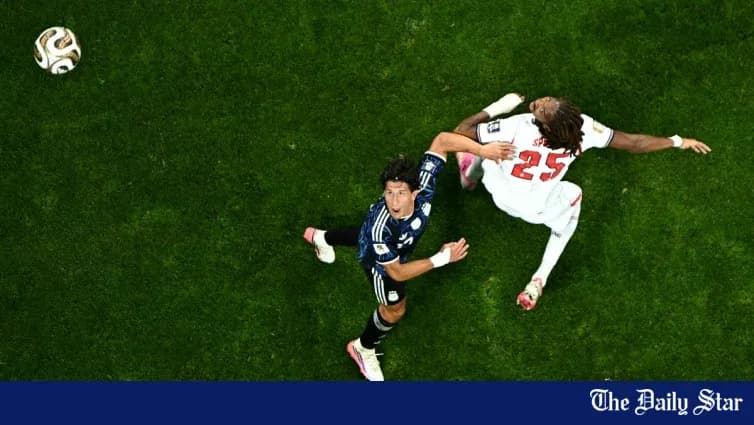
Argentina's World Cup Semifinal Triumph Against England
They might need to check the foundations of Mercedes-Benz Stadium.
When Lautaro Martinez’s 92nd-minute header ripped past Jordan Pickford, the sound from the Albiceleste end didn’t just celebrate a goal. It shook the place. It felt like a release of years, of scars, of a rivalry that never really sleeps.
Argentina are back in a World Cup final, dragged there by a wild, breathless 2-1 comeback against England in a semifinal that veered from tense to feral.
At the centre of it all, again, stood 39-year-old Lionel Messi. Legs older, mind sharper, still the conductor. He slipped the pass for Enzo Fernandez to detonate an 85th-minute equaliser, then delivered the decisive ball for Lautaro’s winner. Two passes, two daggers.
But this night wasn’t just about the genius in No. 10. It was about the war around him.
Scaloni Tears Up the Script
Argentina had been accused all tournament of drifting. Playing within themselves. Waiting for the late twist, the familiar miracle. Not here. Not against this opponent, in this stadium, with this history.
Lionel Scaloni didn’t ease his team into the contest. He hurled them into it. The world champions pressed high, tackled hard, and turned the semifinal into a street fight in the opening minutes.
And then there was the name on the team sheet that made English hearts jolt: Simeone.
Not Diego this time, but Giuliano. His 23-year-old son. A surprise starter, a psychological jab before kickoff that dragged memories straight back to Saint-Etienne ’98 and Beckham’s red card under the old Simeone’s shadow.
If that was mind games, what followed was pure graft.
Giuliano Simeone played like a man who had been waiting for this exact night. Three years removed from a horrific leg fracture, he ran as if every sprint was a small act of defiance. On the right flank, he formed a snarling partnership with Nahuel Molina, while his Atletico Madrid teammate Julian Alvarez stretched England’s back line.
Argentina’s midfield set the tone. Enzo Fernandez, Alexis Mac Allister, Leandro Paredes, Nicolas Tagliafico — all snapped into duels, all bought into the chaos. Yet Simeone operated on his own frequency, a relentless presence hunting every loose ball, every second phase, every half-clearance.
His energy wasn’t decoration. It was structure. His pressing and covering work gave Messi the oxygen he needed between the lines, the half-spaces where games tilt.
Gordon Strikes, England Retreat
For all Argentina’s fury, it was England who drew first blood. In the 55th minute, Anthony Gordon struck, and suddenly Thomas Tuchel’s side had the lead and something to protect.
England’s response was immediate: retreat. Lines dropped. The bus parked. White shirts sank closer and closer to Pickford’s area, content to suffer and clear and wait.
For Scaloni, that was the cue. The initial storm, led by Simeone, had done its job. Argentina had pushed England back, frayed their nerves, and forced them into a siege mentality. Now they needed a different type of weapon.
On 73 minutes, Giuliano Simeone finally ran out of fuel. He left the pitch exhausted, having recorded four ball recoveries — the second joint-highest figure among Argentines on the night — and having emptied himself into the cause.
His replacement? Rodrigo de Paul. A change heavy with symbolism.
The De Paul Shift
De Paul, once the snarling enforcer in Diego Simeone’s Atletico Madrid midfield, has built his reputation on exactly this kind of contest. He learned the dark arts under the father; now he stepped in for the son. From Atletico to Inter Miami with Messi, his career has been stitched together by combat and loyalty.
He slotted into the chaos as if he’d been waiting for it. De Paul matched Simeone’s ball-recovery tally with four of his own in a frantic cameo and nearly carved out a chance with a curling cross that teased the far post. The substitution didn’t just make sense tactically; it felt like a passing of a torch and a reminder of a lineage of warriors.
The pressure finally told.
Enzo detonated the first crack in England’s wall with that thunderous strike on 85 minutes, a goal that carried the rage and relief of an entire nation. Atlanta erupted. The game, suddenly, belonged to Argentina again.
Then came stoppage time. Then came Lautaro.
Messi, once more, found the moment. The weight of the pass, the timing, the vision — all familiar, all devastating. Lautaro met it with a header that seemed to hang in the air for an extra heartbeat before it flew past Pickford. By the time the net bulged, the Albiceleste end was already in orbit.
Rivalry, History, and a New Name in Folklore
Argentina and England do not meet in a vacuum. Every tackle, every stare, every chant carries echoes of Las Malvinas, of the 1982 war, of a political and emotional conflict that refuses to fade. Their football rivalry has long been one of the sport’s most charged, and this semifinal only deepened the scar tissue.
Messi will dominate the front pages, as he always does. A 39-year-old dragging his country to yet another World Cup final is the kind of storyline that writes itself.
But deep in the fabric of this night, another story has been stitched in.
Giuliano Simeone, the son who inherited not just a name but a ferocious competitive streak, ran himself into Argentine folklore in Atlanta. No goal, no assist, no headline moment — just pure, relentless sacrifice in a match that demanded exactly that.
In a semifinal dripping with history, it was the youngest Simeone on the pitch who helped light the fuse for Argentina’s latest resurrection. And somewhere in the stands or on a screen, you can imagine Diego watching, knowing that on the biggest stage of all, the family name once again haunted England.