Tottenham's Season Crisis: Fragility and Inconsistency
Tottenham’s season is already on the brink, and it’s only September.
A 3-2 home defeat to Aston Villa on Saturday left Spurs marooned in the Premier League relegation zone, still without a win after five games and stripped of any early-season optimism. The numbers are grim; the feeling around the club is worse.
Strong start, same old collapse
For 30, maybe 40 minutes, Tottenham looked like a team trying to claw its way out of trouble. They pressed high, moved the ball sharply and carved out clear chances. Villa were second best, hanging on as the home side finally showed some of the intensity their situation demanded.
Then the familiar story kicked in.
Missed chances at one end, punishment at the other. Once Villa found a way through, Spurs unraveled with alarming speed. Shape went. Composure went. Belief vanished. By the time the final whistle blew on a 3-2 loss, the pattern of their season had been brutally underlined: start well, crumble under pressure, leave empty-handed.
De Zerbi’s damning verdict
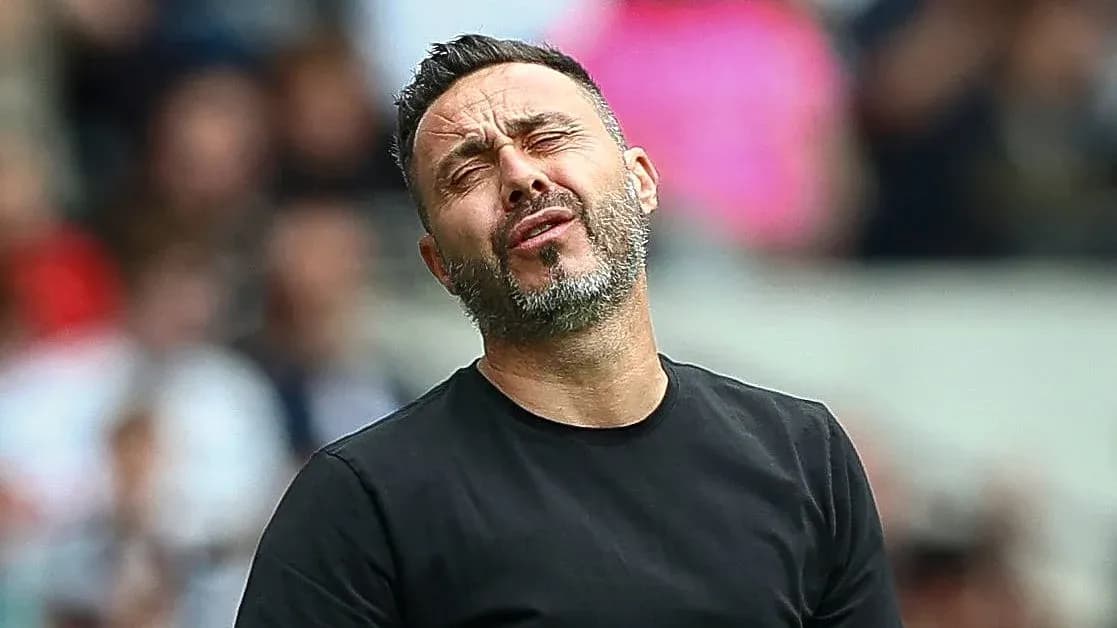
Roberto De Zerbi did not sugar-coat any of it.
Speaking to talkSPORT after the game, the Italian cut an exasperated figure, openly questioning the mentality of his squad and the very identity of his team.
"It's difficult to explain because, in my career, 14 years as a coach, I've never seen one team like us," he said. "So fragile, so inconsistent. You're good, or you're bad. You can't be very good in the first 30, 40 minutes, and then concede like this in this way. It's tough to accept for me."
This wasn’t a manager hiding behind bad luck or refereeing calls. This was a manager stunned by his own side.
Pressed on what exactly triggers these collapses, De Zerbi could only hold his hands up.
"Listen, I'm a coach, but I do not have all the answers...for your question, I have no answer.
"I can say what I think, what I've seen today and I saw my team in the first half play very well, we had chances to score. We didn't score and then we conceded the first goal...we have to stay closer and stay stronger, more compact."
The turning point came again after the break. Tottenham responded with a goal from Kudus, a moment that should have steadied them and re-ignited the crowd. Instead, the energy drained away.
"In the second half, after Kudus' goal, I don't know if the players lost energy...now we have to explain another defeat."
Another defeat. Same script.
Leadership void on the pitch
De Zerbi guided Spurs to safety last season, dragging them away from danger and into calmer waters. That rescue job now feels a long time ago. His second year has started with the kind of fragility that gets managers and squads torn apart.
The Italian was clear about where he sees one of the core problems: nobody is grabbing this team by the scruff of the neck when the tide turns against them.
"Maybe the communication between the players [is the problem], maybe the leaders have to be stronger," he said. "We need leaders to drive and lead the team. With Newcastle it was the same, in Liverpool it was the same, with Everton it was the same... we have to find the solutions."
Those names tell their own story. Different opponents, same collapse. A team that can dominate early phases, then disintegrate the moment they are punched in the mouth.
The structure breaks, the distances between players grow, and the noise inside the stadium shifts from backing to disbelief. Spurs don’t just concede goals; they lose control of games in clusters, as if one setback wipes out everything that came before it.
Crisis of mentality
This is no longer a blip. It’s a trend.
Five league games, no wins, and the table already screaming danger. A side that can look “very good” for half an hour, as De Zerbi insists, but cannot hold a performance together for 90 minutes. A squad accused by its own manager of being "so fragile, so inconsistent."
The next step is clear: urgent, uncomfortable conversations.
The Italian has vowed to hold talks with his players to confront what he sees as deep-rooted mentality issues, from communication on the pitch to the absence of genuine leaders when the pressure spikes.
Tactics can be tweaked. Systems can be adjusted. But unless someone inside that dressing room starts imposing standards when the game turns ugly, Tottenham’s season will keep following the same brutal pattern — and the question will not be whether they can climb the table, but how long they can keep living this close to the edge.