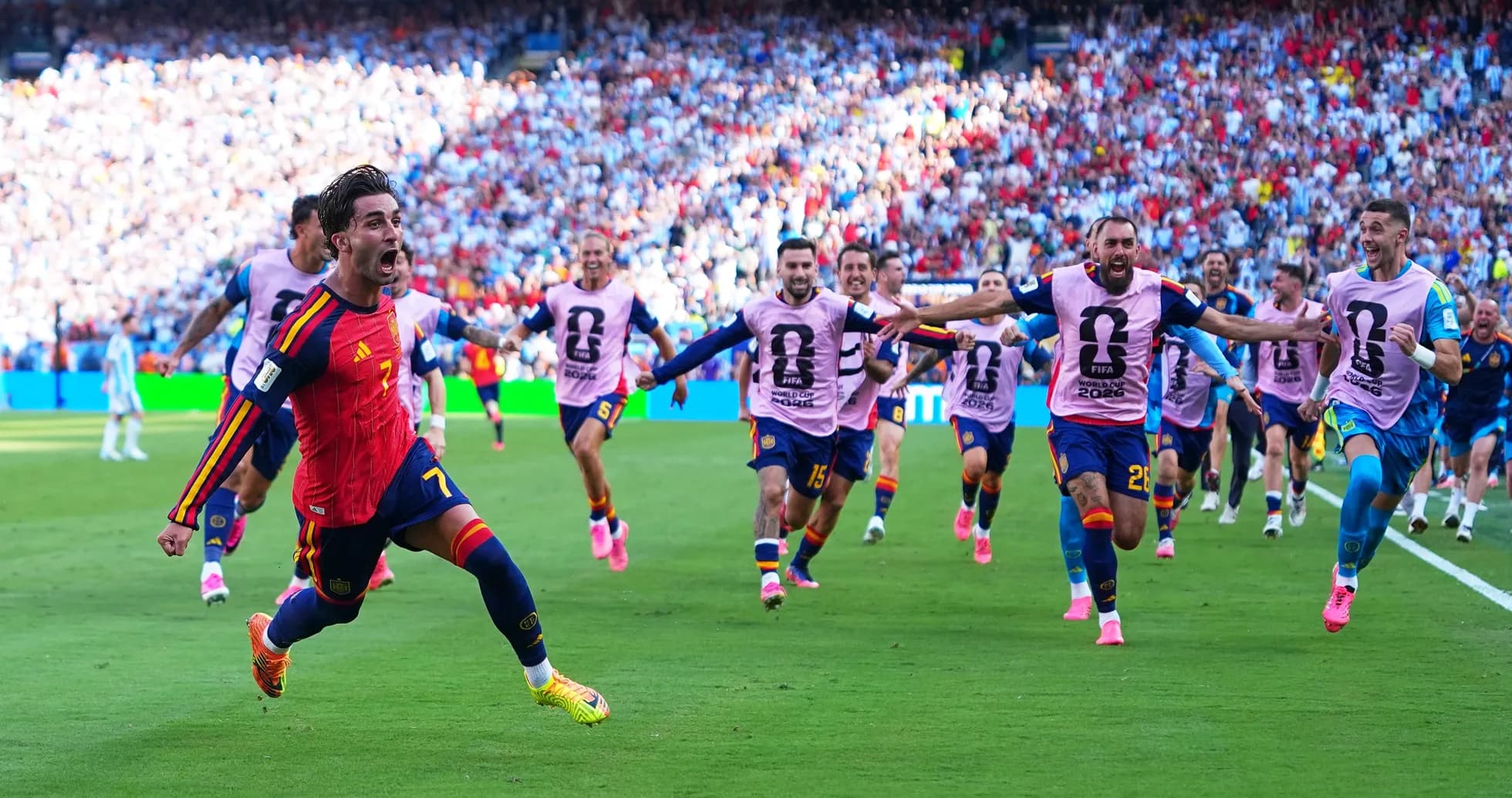
World Cup 2026: Qatar vs Switzerland Match Preview
On 13 June 2026, the World Cup arrives at Levi's Stadium in San Francisco Bay Area, where Qatar and Switzerland step into the glare of a global stage with their Group B journey just beginning and everything still possible. For Qatar, listed among the ranking of third-placed teams, the stakes are immediate: every point could be a lifeline toward the World Cup (Play Offs). For Switzerland, starting from the foot of the Group B standings, this opener is about seizing control of their path before the group takes shape.
Season Context
Qatar enter the World Cup with a clean slate in the standings: 0 games played, 0 goals scored, 0 goals conceded and 0 points. Their ranking among the third-placed teams comes with the clear tag of “Promotion - World Cup (Play Offs)”, underlining that their route to the knockouts may hinge on fine margins across the group. With no form data yet and no goals for or against, Qatar’s story in 2026 begins entirely on this night.
Switzerland also start from zero in Group B: 0 matches played, 0 goals for, 0 goals against and 0 points. Listed fourth in the group without any additional description, they are statistically level with their rivals but must build their case from scratch on the pitch. With no recorded form string and no previous goals data in this World Cup campaign, their ambitions remain theoretical until the first whistle in San Francisco Bay Area.
Form & Momentum
There is no recorded recent form string for Qatar in the standings, and their World Cup numbers are blank so far (0 played, 0 goals for, 0 goals against), which makes this opener as much a psychological test as a tactical one. With no per-game averages available, their momentum is defined not by statistics but by how quickly they can impose themselves in a tournament context where every group-stage fixture carries weight.
Switzerland arrive in a similar statistical vacuum, with no standings form string and no goals scored or conceded yet in this World Cup (0 played, 0 goals for, 0 goals against). Their momentum cannot be quantified from the data provided, placing extra emphasis on how they adapt to the conditions at Levi's Stadium and how their experienced core translates preparation into points from the very first match.
Head-to-Head Patterns
The only competitive reference point between these nations in the data comes from a non-World Cup meeting that still lingers in the background of this contest. On 14 November 2018, Qatar defeated Switzerland 0-1 in Friendlies (season 2018, November 2018), a result that offered a reminder that reputations can be overturned when the whistle blows. While that match came in a friendly setting, the narrow away win for Qatar in Lugano provides a subtle psychological edge, even if the World Cup stage is a very different arena.
Tactical Preview
With no formations recorded yet in the team statistics for Qatar, their tactical identity here must be inferred from the squad profile rather than established patterns. Qatar’s list is rich in attackers such as Akram Afif, Almoez Ali, Edmilson Junior and Hassan Al Haydos, alongside experienced midfielders like Abdulaziz Hatem and Karim Boudiaf. That blend suggests Qatar can field a forward-leaning side, with multiple attacking options capable of interchanging roles across the front line. At the same time, defenders like Boualem Khoukhi, Lucas Mendes and Pedro Miguel provide a seasoned backbone, giving them the flexibility to switch between a compact, safety-first structure and a more expansive approach depending on how the match unfolds.
Switzerland, for their part, bring a balanced squad with clear lines of responsibility across the pitch. At the back, defenders such as M. Akanji, N. Elvedi and R. Rodríguez give Switzerland the tools for a stable defensive platform, even though no goals data or formations are yet logged for this World Cup campaign (0 played, 0 goals for, 0 goals against). In midfield, G. Xhaka, R. Freuler and D. Zakaria form a spine capable of controlling tempo and protecting the back line, while wide and advanced options like R. Vargas, Z. Amdouni, B. Embolo and N. Okafor offer varied threats in transition and in the final third. The absence of recorded possession or shot metrics in the statistics leaves their exact style open, but the squad composition points toward a side comfortable mixing controlled buildup with direct, vertical surges.
Because both teams have yet to play in this World Cup, there are no confirmed patterns in pressing intensity, possession share or chance creation in the data. However, the predictions model leans heavily toward Qatar avoiding defeat (winner comment “Win or draw”), suggesting an expectation that Qatar’s structure and attacking depth will be sufficient to at least match Switzerland’s threats over 90 minutes, even though the betting markets strongly favour the nominal away side.
Statistical Snapshot
- Competition: World Cup, season 2026 — 13 June 2026.
- Venue: Levi's Stadium, San Francisco Bay Area.
- Prediction: Win or draw — Double chance : Qatar or draw.
- Win Probabilities: Home 50% / Draw 50% / Away 0%.
- Model: Qatar 0% — Switzerland 0%.
Betting Verdict
The prediction model points clearly toward Qatar avoiding defeat, recommending a “Double chance : Qatar or draw” despite the bookmakers making Switzerland a heavy favourite at roughly 1.18–1.23 for the away win and Qatar out at around 12.00–15.75 for the upset. With both teams starting from identical statistical baselines in the World Cup standings (0 played, 0 goals for, 0 goals against), the only historical data point is Qatar’s 0-1 victory over Switzerland in Friendlies (season 2018, November 2018), which supports the idea that this matchup may be tighter than the odds suggest. In that context, siding with Qatar on the double-chance market aligns the model’s view with the limited head-to-head evidence, offering a more cautious position than backing the short-priced away win.