Australia's Strong Start in World Cup Group D Against Türkiye
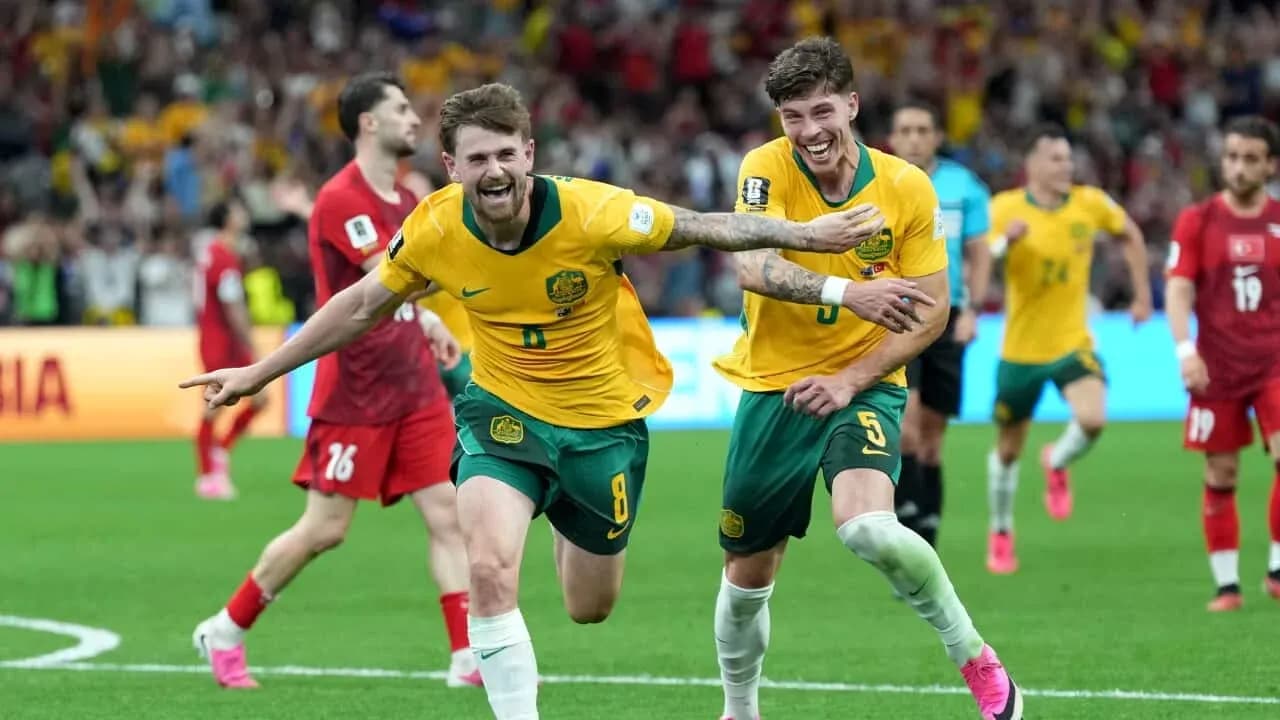
Under the closed roof of BC Place in Vancouver, this World Cup Group D opener became a quiet statement of intent from Australia and a jolt of reality for Türkiye. Following this result, Australia sit 2nd in Group D on 3 points with a goal difference of 2, having scored 2 and conceded 0 in total. Türkiye, by contrast, are 3rd with 0 points and a goal difference of -2 after a 2-0 defeat on their travels.
The scoreline mirrors the broader seasonal DNA emerging from the raw numbers. Heading into this game, Australia had played 1 fixture in total in this World Cup cycle, and that single outing at home produced a 2-0 win. Their goals-for profile is straightforward: 2 goals in total, all at home, for an average of 2.0 at home and 2.0 overall. Defensively, they are pristine so far: 0 goals conceded in total, 0.0 against at home and 0.0 overall, and 1 clean sheet at home out of 1. Türkiye arrive with the inverse pattern: 1 match played away, 0 goals scored in total, and 2 conceded on their travels for an away average of 2.0 goals against and 0.0 goals for. The early narrative is stark—Australia are efficient and secure; Türkiye are still searching for their attacking pulse and defensive balance.
I. The Big Picture: Shapes, Space, and Intent
Tony Popovic doubled down on structural security with a 5-4-1. Patrick Beach anchored a back five of Jacob Italiano, Alessandro Circati, Harry Souttar, Cameron Burgess, and Jordan Bos. In front of them, a narrow but industrious four of Connor Metcalfe, Aiden O’Neill, Paul Okon-Engstler, and Nestory Irankunda supported lone forward Mohamed Touré.
Vincenzo Montella, meanwhile, trusted his preferred 4-2-3-1. Uğurcan Çakır started behind a back line of Zeki Çelik, Merih Demiral, Abdülkerim Bardakcı, and Ferdi Kadıoğlu. The double pivot of İsmail Yüksek and Hakan Çalhanoğlu was meant to control rhythm, feeding an advanced trio of Arda Güler, Orkun Kökçü, and Barış Alper Yılmaz behind central forward Kerem Aktürkoğlu.
On paper, it was classic tournament contrast: Australia’s five-man chain and single striker designed to compress space and spring forward; Türkiye’s 4-2-3-1 built for ball circulation and creative overloads between the lines. In practice, Australia’s structure proved more coherent over 90 minutes.
II. Tactical Voids and Discipline: Who Bent, Who Broke
There are no listed injuries or suspensions, so both coaches effectively worked with full squads. The tactical voids, therefore, came from within the shapes rather than from absentees.
Australia’s disciplinary record in this snapshot is spotless. Their season card distribution shows no yellow or red cards in any time range. That matters: Popovic can ask his side to repeat the same aggressive 5-4-1 in the next group matches without suspensions looming. The back five, especially Souttar and Burgess, can continue to defend on the front foot knowing there is no accumulated-card drag from this fixture.
Türkiye’s discipline tells a different story. Their yellow-card profile shows a clear late-game spike: 1 yellow in the 76-90' window, accounting for 100.00% of their cautions so far. That caution belongs to Yunus Akgün, who came off the bench, played 35 minutes, and left his mark on the disciplinary ledger. While there are no reds recorded in the team statistics, Yunus appears in both the top yellow cards and top red cards lists for the World Cup, a quirk of the dataset that underlines how conspicuous his 1 yellow card has been in such a small sample.
This late caution fits the emotional arc: chasing the game, Türkiye’s structure frayed, and their attacking substitutes had to press and foul higher up. It is a small but telling sign of a side forced into reactive football rather than dictating terms.
III. Key Matchups: Hunter vs Shield, Engine Room vs Enforcer
Hunter vs Shield The clearest individual storyline belongs to Nestory Irankunda. As a wide midfielder in Australia’s 5-4-1, he is already among the competition’s top scorers with 1 goal in total from 1 appearance, backed by 2 shots, both on target. His 7.5 rating and 61 minutes on the pitch point to a high-impact, high-intensity role rather than volume play.
Irankunda’s aggression faced a Türkiye back line that, across their single away outing, has conceded 2 goals in total with an away average of 2.0 against. Demiral and Bardakcı were tasked with stepping out to meet him when he drifted inside, while Ferdi Kadıoğlu had to judge when to track him wide. The numbers suggest that balance never quite materialised: Türkiye’s away defensive record is already defined by this 2-0 loss, and Irankunda’s clinical edge is a big reason why.
Shielding him was a back five that has yet to concede in this World Cup, giving Australia a total goals-against figure of 0 and a home average of 0.0. That allowed Irankunda to take risks in transition, knowing Circati, Souttar, and Burgess could absorb counters.
Engine Room: Playmaker vs Enforcer In midfield, the duel was subtler but just as decisive. For Australia, Paul Okon-Engstler emerges as the metronome and disruptor. He leads the World Cup assist charts in this sample with 1 assist in total, and his underlying numbers are those of a modern two-way midfielder: 32 passes with 81% accuracy, 2 key passes, 3 tackles, 2 blocked shots, and 3 interceptions in 84 minutes. Every one of those 2 blocked shots is a successful block, underscoring his defensive reading of the game.
Across from him, Hakan Çalhanoğlu and İsmail Yüksek were meant to control tempo. But with Türkiye failing to score in total and posting 0.0 goals-for on their travels, the burden on their double pivot was immense: break lines, yet also shield a back four that has already conceded 2 away. Okon-Engstler’s ability to both screen and spring attacks tilted that balance. He repeatedly disrupted Türkiye’s build-up and then turned those recoveries into forward passes, connecting midfield to Touré and Irankunda.
The secondary matchup came from the bench. Yunus Akgün, introduced as an attacking spark, completed 21 passes at 90% accuracy, created 2 key passes, and even won 1 of his 2 duels. Yet his 1 yellow card and the context of chasing a two-goal deficit underline how his influence came too late and under duress.
IV. Statistical Prognosis: Australia’s Template, Türkiye’s Dilemma
From a pure statistical lens, Australia’s template is clear. They have:
- Played 1 match in total, won 1, with 0 draws and 0 losses.
- Scored 2 goals in total, all at home, for a home and overall average of 2.0.
- Conceded 0 in total, with a home and overall average of 0.0, and 1 clean sheet at home.
- Failed to score 0 times in total and have not missed a penalty; their penalty record shows 0 taken, 0 scored, 0 missed.
This is the profile of a side built on defensive solidity and selective, efficient attacking. With a 5-4-1 used in 1 out of 1 lineups, Popovic has a settled base. The spine—Beach, Souttar, Burgess, O’Neill, Okon-Engstler, and Touré—has delivered control and clean-sheet reliability. Add Irankunda’s cutting edge and you have a low-risk, high-reward tournament blueprint.
Türkiye, conversely, are at a crossroads:
- 1 match in total, 0 wins, 0 draws, 1 loss.
- 0 goals scored in total, with an away average of 0.0.
- 2 goals conceded in total, all away, for an away and overall average of 2.0 against.
- 0 clean sheets in total and 1 failure to score on their travels.
- No penalties taken, scored, or missed.
Their 4-2-3-1 has been used in 1 out of 1 fixtures, but the current data suggests it has not yet found equilibrium. The creative cluster of Arda Güler, Kökçü, and Barış Alper Yılmaz has not translated possession into end product, while the back four has already been breached twice without reply. The late-game yellow-card surge (100.00% of their cautions arriving in the 76-90' window) hints at frustration and tactical stretching as they chase deficits rather than manage leads.
In tournament terms, Australia leave Vancouver with a clear identity: compact, disciplined, and lethal through Irankunda and Okon-Engstler’s vertical connections. Türkiye depart with questions. Can Montella protect his back line without blunting his creators? Can the 4-2-3-1 become a platform rather than a vulnerability?
Following this result, the numbers point in one direction: Australia’s defensive solidity and emerging stars give them a robust platform for the rest of Group D, while Türkiye must rapidly recalibrate both structure and mentality if they are to turn sterile possession into meaningful xG and points on their travels.