Netherlands vs Japan: Tactical Analysis of World Cup Opener
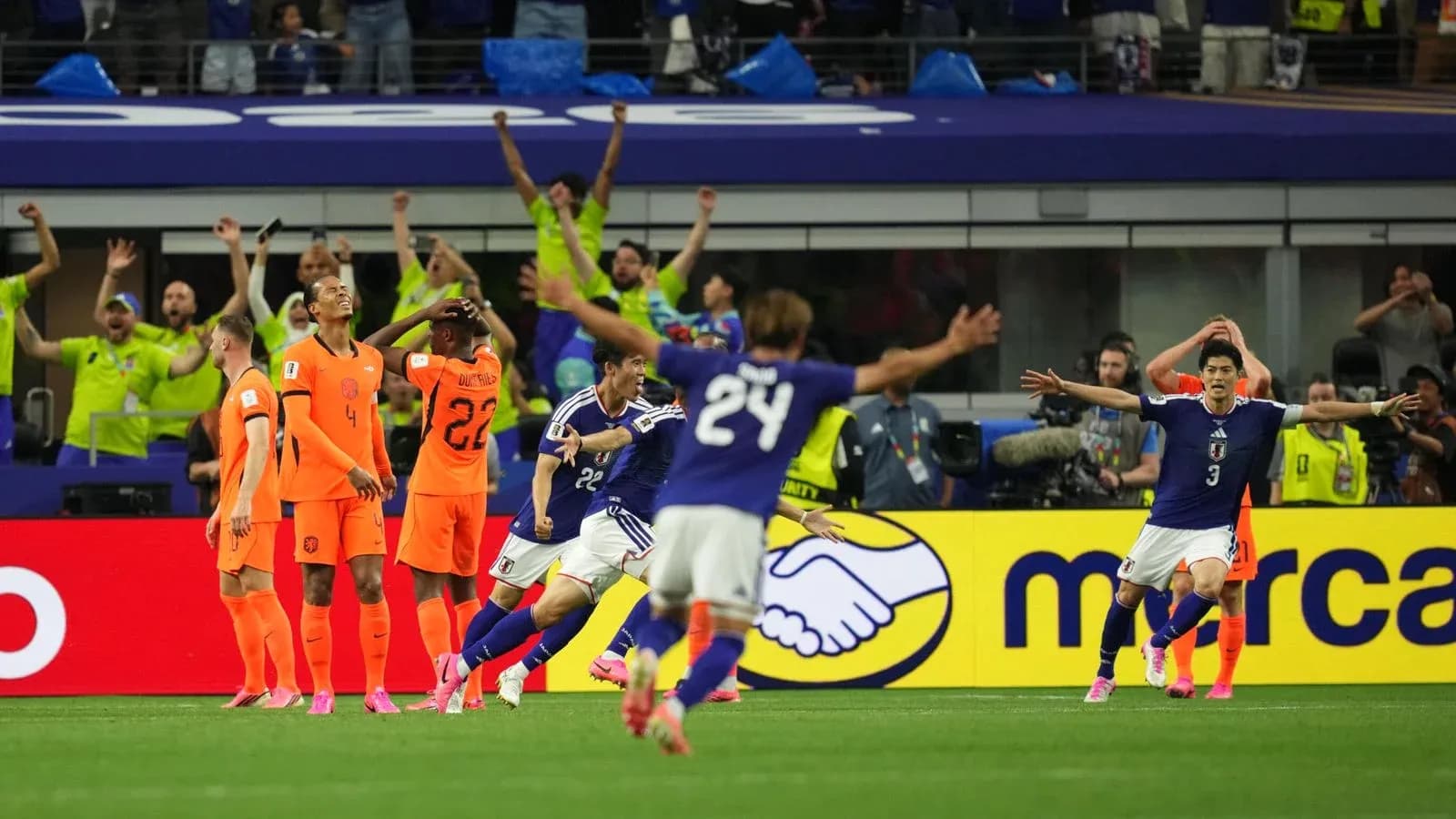
The AT&T Stadium in Arlington hosted a World Cup opener that felt more like a knockout rehearsal than a tentative group-stage sparring. Netherlands and Japan shared a 2-2 draw, a scoreline that captured both the Dutch dominance in phases and Japan’s ruthless ability to punch back in transition. Following this result, Group F is finely poised: Netherlands sit with 1 point and a goal difference of 0 overall, Japan also on 1 point with the same goal difference of 0. Both sides have shown clear identities – and clear flaws – that will shape the tactical narrative of their remaining group games.
Netherlands’ seasonal DNA is already evident. Heading into this game they had leaned on a single formation, the 4-3-3, and Ronald Koeman doubled down on it. The back four of D. Dumfries, J. P. van Hecke, V. van Dijk and M. van de Ven protected B. Verbruggen, while a midfield trio of R. Gravenberch, F. de Jong and T. Reijnders tried to dictate tempo and compress space. Up front, C. Summerville and C. Gakpo flanked D. Malen in a front line built for direct running and aggressive pressing.
Japan arrived with a contrasting structure: a 3-4-2-1 that morphed constantly. H. Ito, S. Taniguchi and T. Watanabe formed the back three in front of Z. Suzuki, with a fluid band of four in midfield – R. Doan, K. Sano, D. Kamada and K. Nakamura – feeding the mobile front line of T. Kubo, D. Maeda and A. Ueda. Hajime Moriyasu’s side were clearly set up to absorb and spring, happy to let Netherlands have the ball before slicing through in transition.
There were no listed injuries or absentees in the data, so both coaches effectively had full decks. But the disciplinary undercurrent already hints at future selection dilemmas. For Netherlands, the season card profile is stark: all of their yellow cards so far have come late. In total this campaign, 33.33% of their yellows have been shown between 61-75 minutes, another 33.33% between 76-90, and the remaining 33.33% between 91-105. It paints a picture of a side that grows increasingly stretched and emotional as the game wears on.
On an individual level, the Dutch front line is walking a disciplinary tightrope. M. Depay, used off the bench, has already collected 1 yellow card in 20 minutes of action. C. Summerville, who lit up this fixture, also has 1 yellow card to go with his attacking output. While the red card data in the feed appears misaligned with the actual disciplinary events (both Depay and Summerville are listed but with no red cards recorded in their match lines), the key point stands: Koeman’s attacking rotation is aggressive and fiery, and late-game cards could force changes in upcoming fixtures.
Japan, by contrast, have no yellow or red cards recorded at all in their World Cup campaign so far. That clean disciplinary slate matches the impression of a side that defends with structure rather than desperation. It also gives Moriyasu maximum flexibility for rotation and tactical fouling in future high-stakes moments, knowing suspensions are not yet looming.
The “Hunter vs Shield” duel in this match was embodied by C. Summerville against Japan’s back three. Summerville’s World Cup so far has been electric: 1 goal from 1 shot on target, 29 passes at 86% accuracy, 1 successful dribble from 1 attempt, and 5 duels won out of 7. He is not just a finisher but a constant destabiliser, dragging defenders out of line. Against a Japanese defence that, on their travels, have conceded 2.0 goals on average and 2 goals in total, his ability to attack the channels and half-spaces was always likely to be decisive.
On the other side, Japan’s attacking “Hunter” is more collective. A. Ueda led the line from the start, but the creative damage came from deeper. T. Kubo, operating between the lines, has already contributed 1 assist in 75 minutes, with 16 passes at 75% accuracy and 1 key pass. From the bench, K. Ogawa added another dimension: in just 15 minutes he registered 1 assist and 1 shot, immediately validating his role as an impact substitute. Against a Dutch defence that, at home, have conceded 2 goals and an average of 2.0 goals per game, Japan’s layered forward options proved more than capable of exploiting moments of disorganisation.
The “Engine Room” battle was just as compelling. For Netherlands, R. Gravenberch is emerging as the central architect of their possession game. In total this campaign, he has 2 assists from midfield, 25 passes at 88% accuracy, and 2 key passes, plus 3 duels won from 6 and 2 successful dribbles from 3 attempts. He is the conduit through which Netherlands accelerate, linking F. de Jong’s deeper circulation to the front three’s vertical runs.
Japan’s answer in that zone is D. Kamada, supported by K. Sano and K. Nakamura, with R. Doan and Kubo tucking inside to overload central lanes. Their 3-4-2-1 allows them to create a box in midfield against the Dutch three, forcing Gravenberch and Reijnders into constant scanning and defensive work rather than pure creation. That dynamic was visible in the way Japan repeatedly found pockets between the Dutch lines, particularly when Maeda dropped off the front to combine.
Statistically, both sides emerge from this fixture with mirrored profiles. In total this campaign, Netherlands have scored 2 goals and conceded 2, averaging 2.0 goals for and 2.0 against at home. Japan, on their travels, have scored 2 and conceded 2 as well, with the same averages of 2.0 for and 2.0 against away. Neither side has kept a clean sheet; neither has failed to score. Both are yet to win, both are unbeaten.
The absence of penalties so far is also notable. Netherlands have taken 0 penalties in total, scoring 0 and missing 0, while Japan’s record is identical: 0 taken, 0 scored, 0 missed. In a group that already looks tight, the first side to add a reliable penalty threat could tilt the balance in their favour.
From an xG-style prognosis – even without explicit expected goals numbers – the patterns are clear. Netherlands are a high-output, high-risk side: they create enough to score multiple times but leave gaps that organised opponents can punish, especially late on when their card profile suggests fatigue and frustration. Japan are more balanced: their 3-4-2-1 gives them a solid central block and rapid transition lanes, but their away concession of 2.0 goals per game indicates that they struggle to fully close games down against elite attacking units.
Tactically, the draw at AT&T Stadium sets up a fascinating trajectory. Koeman will likely persist with the 4-3-3 but may need to consider earlier introductions for control-oriented midfielders like M. De Roon or T. Koopmeiners from the bench to protect leads and manage that late-card tendency. He also has alternative profiles in attack – M. Depay as a false nine, W. Weghorst as a target man, B. Brobbey as a direct runner – to vary the “Hunter” threat beyond Summerville and Gakpo.
Moriyasu, meanwhile, has every reason to double down on his 3-4-2-1, which has already been used once in this tournament. The bench offers significant tactical flexibility: T. Tomiyasu and K. Itakura can stiffen the back line, Y. Sugawara and Y. Nagatomo can adjust the width and crossing angles, while forwards like J. Ito, K. Ogawa and S. Machino give Japan different pressing and finishing profiles for various game states.
Following this result, the tactical preview for their remaining group matches is one of fine margins. Netherlands will trust their firepower but must tighten the defensive structure and emotional control late on. Japan will lean on structure, transitions and bench impact, knowing they can live with the Dutch in a high-scoring shootout. If this 2-2 in Arlington is a blueprint, both sides are built for drama – and neither is likely to tiptoe quietly through the rest of Group F.