Scotland Secures Narrow Victory Over Haiti in World Cup Clash
The night at Gillette Stadium ended with a narrow scoreline but a wide gap in emotion. Following this result, Scotland walk away from Boston with a 1-0 win, three points, and top spot in Group C, while Haiti are left bottom of the group, still searching for their first World Cup goal and point.
I. The Big Picture – Two 4-4-2s, one clear edge
Both sides mirrored each other structurally in a classic 4-4-2, but the systems told very different stories.
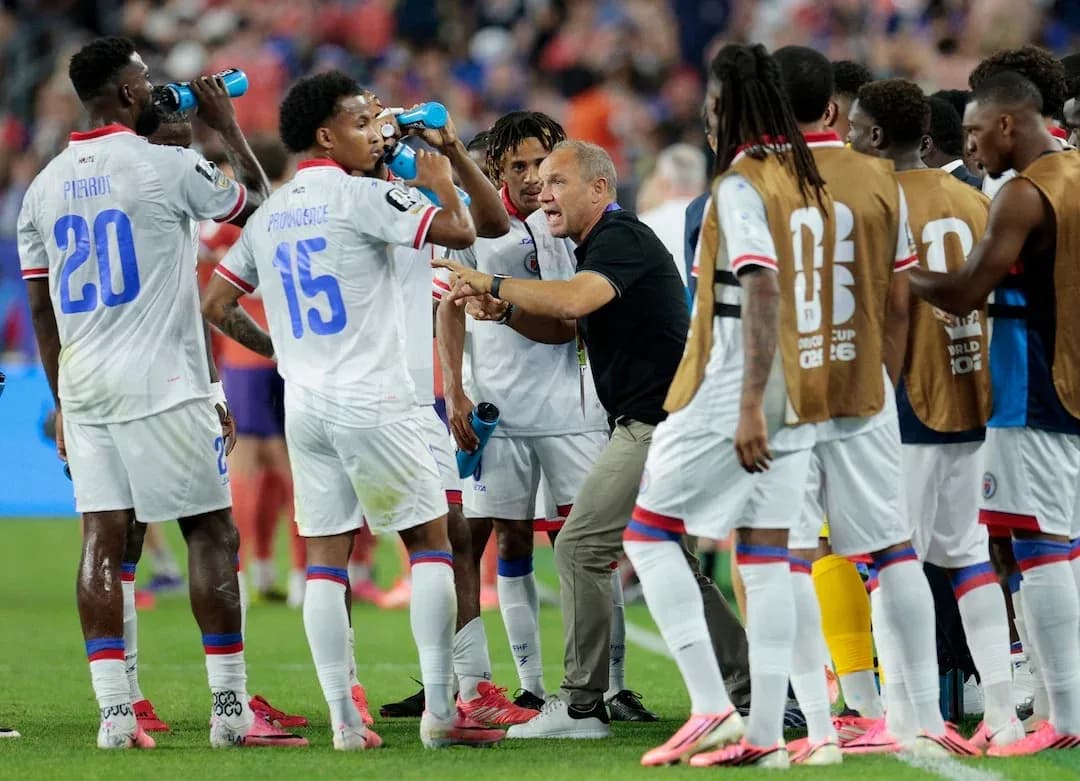
Sebastien Migne’s Haiti set up with Johny Placide behind a compact back four of Carlens Arcus, Ricardo Adé, Hannes Delcroix and Martin Expérience. Ahead of them, a hard‑running midfield line – Louicius Don Deedson and Ruben Providence wide, Danley Jean Jacques and Jean-Ricner Bellegarde inside – was tasked with bridging the gap to the front pair of Frantzdy Pierrot and Wilson Isidor.
On paper, Steve Clarke’s Scotland matched the shape: Angus Gunn in goal; a back line of Aaron Hickey, Grant Hanley, Jack Hendry and Andy Robertson; a midfield four of Ben Gannon-Doak, Scott McTominay, Lewis Ferguson and John McGinn; with Lawrence Shankland and Che Adams up front. In reality, Scotland’s 4-4-2 constantly morphed into a 2-3-5 in possession, with Robertson and Hickey high and wide, McTominay stepping into the first line of build-up, and McGinn drifting between the lines.
Heading into this game, Haiti’s statistical profile was a blank canvas at World Cup level. Following this result, it is sharply defined: in total this campaign they have played 1 match, lost 1, scored 0 and conceded 1. The goal difference of -1 underlines a team that defended in phases but lacked punch. At home – this was officially a “home” fixture in the group schedule – they have played 1, with 0 wins, 0 draws, 1 defeat, 0 goals for and 1 against.
Scotland’s numbers now carry the quiet authority of a side that has started cleanly. On their travels they have played 1, won 1, drawn 0, lost 0, with 1 goal for and 0 against. Overall, that is 1 played, 1 win, 1 goal scored, 0 conceded – a goal difference of +1 and a foothold at the top of Group C.
II. Tactical Voids and Disciplinary Undercurrents
With no published injury or suspension list, both coaches appeared close to full strength. The real absences were structural rather than personnel-based.
For Haiti, the void lay between lines. Pierrot and Isidor often pressed Scotland’s centre-backs in isolation, but with Jean Jacques and Bellegarde pinned by McTominay and Ferguson, the front two were starved of clean service. Deedson and Providence tracked deep to help their full-backs, leaving Haiti’s counters starting from far too low a base.
The disciplinary data adds a subtle layer to that story. Heading into this match, Haiti’s season card map shows a solitary yellow in the 31-45 minute window, accounting for 100.00% of their cautions – a spike that hints at late‑half frustration as defensive work piles up. Against a patient side like Scotland, that tendency to boil over before the break is a tactical risk: fouls in that phase slow transitions just when tired defenders most need relief.
Scotland’s card profile is more scattered but equally revealing. In total this campaign they have 1 yellow between 46-60 minutes (33.33% of their cautions) and 2 yellows between 91-105 minutes (66.67%). That late‑game surge in bookings speaks of a team willing to foul to protect a lead and break rhythm in stoppage time – a hallmark of tournament nous rather than indiscipline.
Individually, three Scots stand out in the disciplinary charts. Aaron Hickey’s single yellow came alongside 75 minutes of aggressive front‑foot defending, 7 duels contested and 4 fouls drawn; his caution is the tax on a proactive role. From the bench, Kenny McLean and Findlay Curtis each logged a yellow in 15-minute cameos, both committing one foul – evidence of substitutes entering a tightening game-state and being asked to disrupt rather than decorate.
III. Key Matchups – Hunter vs Shield, Engine Room vs Enforcer
Hunter vs Shield
With no detailed scoring breakdown yet in the data, the “Hunter vs Shield” duel is more conceptual than statistical. Haiti’s theoretical hunters are Pierrot and Isidor, but in total this campaign the team’s goals-for column sits at 0, with a home average of 0.0. Their threat is therefore more about potential than proof.
Opposite them, Scotland’s shield has been immaculate so far: overall they have conceded 0, with an away average of 0.0 goals against. Hanley and Hendry formed a conservative, no‑nonsense pairing, happy to defend space rather than chase glory passes. Protected by McTominay screening in front, they allowed Scotland’s full-backs to press high without exposing Gunn.
The net effect was that Haiti’s front two were often reduced to chasing long diagonals, battling in disadvantageous duels against a set back line. Without runners from deep to stretch Scotland’s compact shape, the hunters rarely reached the penalty area in numbers.
Engine Room – McTominay and Ferguson vs Jean Jacques and Bellegarde
In midfield, the “Engine Room” duel was decisive. Jean Jacques and Bellegarde are industrious, but they spent much of the evening locked in a containment role. With Haiti failing to score in total this campaign and already having failed to score in 1 home match, the absence of a true line‑breaking passer in central zones was glaring.
McTominay, by contrast, gave Scotland vertical thrust from deep. His presence allowed Ferguson to drift into half-spaces, combining with McGinn and the advancing Robertson. Every time Haiti tried to push Deedson or Providence higher, McTominay’s positioning threatened the ball through the first press, forcing Migne’s wide midfielders back and stretching their legs rather than their imagination.
IV. Statistical Prognosis – Control over chaos
From a pure numbers lens, Scotland’s template is clear. On their travels they average 1.0 goal for and 0.0 against; overall their clean-sheet rate is 100% and they have yet to fail to score. It is the profile of a side comfortable winning by a single strike, leaning on structure and game management rather than volume of chances.
Haiti’s early World Cup identity is more fragile. At home they average 0.0 goals for and 1.0 against; in total this campaign they have failed to score in their only match and have no clean sheets. The goal difference of -1 is modest, but the underlying indicators – no goals, a card spike before half-time, and a system that struggles to connect midfield to attack – suggest they are walking a narrow tactical tightrope.
Without explicit xG figures, the shape of the game still points to a familiar conclusion. Scotland’s territorial control, defensive solidity and willingness to absorb pressure then foul late – as their 66.67% share of yellows in the 91-105 minute band shows – are all traits of a side built for tournament football. Haiti, by contrast, will need to rewire their 4-4-2, either by pushing Bellegarde closer to the forwards or by introducing one of their many attacking substitutes earlier, if they are to turn honest effort into actual threat.
Following this result, Scotland look like a team whose numbers and narrative are aligned: measured, pragmatic, and hard to break. Haiti’s story is only one chapter old, but it already reads like a side that must find a bolder middle third if they are to stay alive in Group C.