Sweden's Dominance in World Cup Opener Against Tunisia
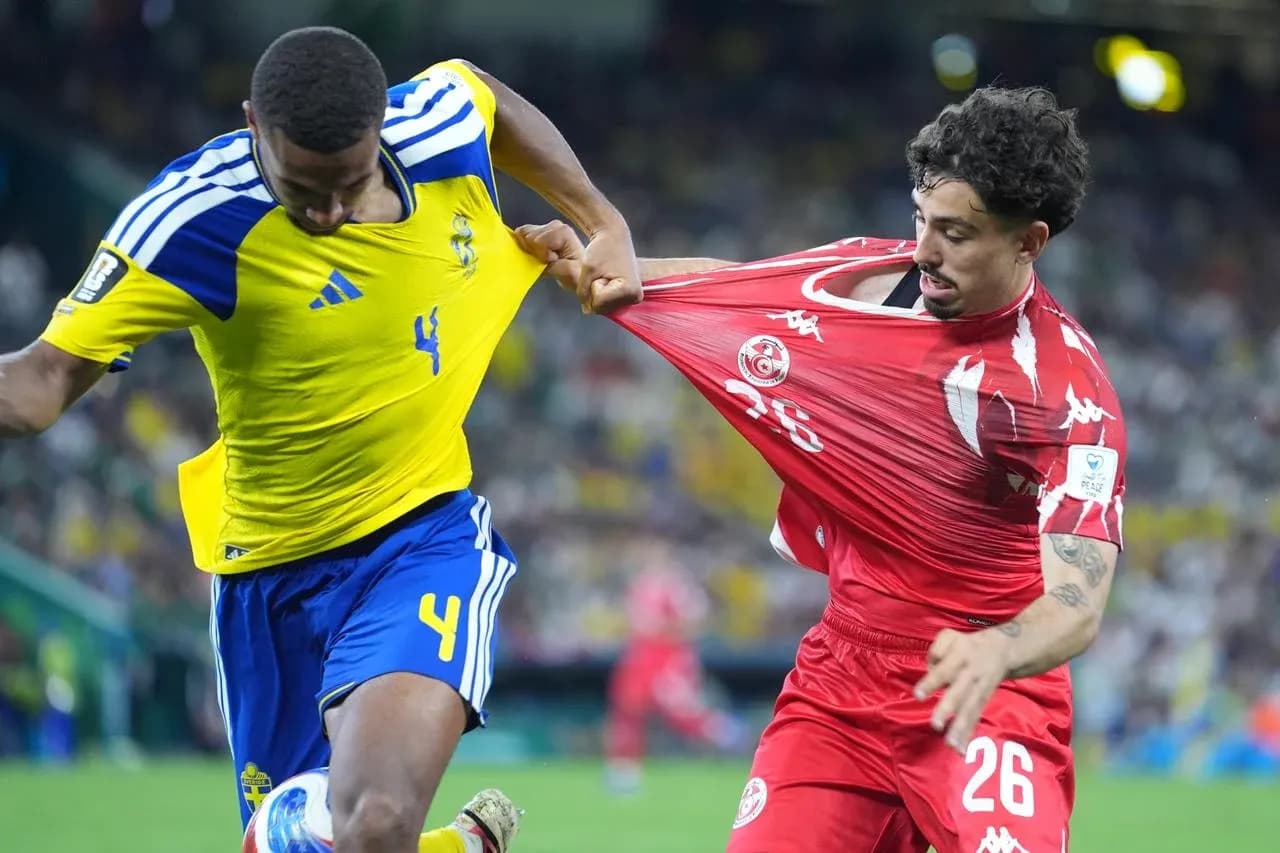
Under the lights of Estadio BBVA in Monterrey, Sweden’s World Cup story opened with a statement. A 5–1 dismantling of Tunisia did more than deliver three points; it revealed a side already playing with the clarity and conviction of a knockout contender. Following this result, Sweden sit top of Group F with 3 points and a goal difference of +4, their attacking structure and squad depth flashing ominous signals to the rest of the tournament.
Tunisia, by contrast, leave the same pitch with the scars of a tactical plan that never truly settled. Their 5-3-2 offered protection on paper, but once Sweden’s front unit found the angles, Sabri Lamouchi’s side were repeatedly stretched and exposed. With 1 goal for and 5 against overall, and a goal difference of -4, Tunisia’s margin for error in the group is already brutally thin.
Sweden’s shape: a 3-1-4-2 with teeth
Graham Potter’s decision to open with a 3-1-4-2 was the defining structural note of the night. The back three of G. Lagerbielke, I. Hien and V. Lindelof gave Sweden a broad base in the first phase, allowing K. Nordfeldt to act as a calm distributor rather than a shot-stopper under siege. Ahead of them, J. Karlstrom as the single pivot was crucial: his positioning between the lines of Tunisia’s first and second pressing waves turned what could have been a cagey midfield battle into a platform for controlled aggression.
The real damage, though, came from the line of four in front of Karlstrom. G. Gudmundsson and A. Bernhardsson stretched Tunisia horizontally, while B. Nygren and Y. Ayari attacked the half-spaces. Ayari, already one of the World Cup’s early headline-makers, embodied Sweden’s vertical intent. As a top scorer in the competition, he has 2 goals from 2 shots on target in his first 90 minutes, paired with 27 passes and 2 key passes. His rating of 8.6 reflects not just end product, but a complete midfield performance: 3 tackles and 1 interception show he was as present in the press as he was in the final third.
Up front, the partnership of V. Gyökeres and A. Isak offered contrasting but complementary threats. Gyökeres, with 1 goal, 1 assist, 4 shots (2 on target) and 4 key passes from 19 total passes, operated as a facilitator and finisher in equal measure. Isak, already among the top performers for both goals and assists, produced 1 goal and 2 assists from just 2 shots on target, supported by 17 passes at 82% accuracy. His 8.9 rating underlines how central he was to Sweden’s attacking patterns: dropping off the line, linking with Ayari, and then arriving in the box at precisely the right moments.
Following this result, Sweden’s offensive numbers are stark: in total this campaign they have scored 5 goals from 1 match, with an average of 5.0 goals for at home and 5.0 overall. Even more telling is their spread of contributors. Off the bench, M. Svanberg added a late flourish with 1 goal from his only shot in 13 minutes, while L. Bergvall, in just 25 minutes, chipped in 1 assist and 1 key pass, plus a defensive contribution of 1 tackle and 1 interception. This is not a side reliant on a single star; it is a system that manufactures chances from multiple zones and personnel.
Tunisia’s 5-3-2: a line of five under siege
On paper, Tunisia’s 5-3-2 with A. Abdi and Y. Valery as wing-backs, and a central trio of O. Rekik, M. Talbi and M. Ben Hamida, should have provided a robust shell. In practice, the back five were constantly forced into emergency defending. With Sweden’s dual strikers pinning the last line and the Swedish wing-backs stretching the pitch, Tunisia’s defenders were repeatedly dragged into wide and uncomfortable positions.
In midfield, R. Khedira, E. Skhiri and H. Mejbri were asked to cover enormous ground. Skhiri, typically a metronome and shield, found himself often outnumbered as Ayari and Nygren flooded the inside channels. The forwards E. Saad and A. Slimane worked, but too often their runs were isolated counters rather than part of sustained phases.
Statistically, Tunisia’s problem is brutally simple: on their travels in this World Cup they have conceded 5 goals and scored just 1, with an away average of 1.0 goal for and 5.0 goals against. There is no clean sheet, no platform to build from, and their biggest defeat so far – this 5–1 scoreline – already defines their campaign. Disciplinarily, the picture is mixed: their only yellow card of the tournament so far arrived in the 46–60 minute window, meaning 100.00% of their cautions have come just after half-time, a sign of a team struggling to reset emotionally and structurally after the break.
Hunter vs Shield: Sweden’s front line against Tunisia’s leaking defence
The “Hunter vs Shield” duel in this match was almost unfairly tilted. Sweden’s attacking core – Isak, Gyökeres and Ayari – combined for 4 goals and 4 assists in total this campaign. Against that, Tunisia’s defensive record stands at 5 goals conceded in 1 match, with no clean sheets and an away average of 5.0 goals against.
Isak’s movement between the Tunisian centre-backs and wing-backs repeatedly fractured the line of five, while Gyökeres’ ability to receive under pressure and release runners forced M. Talbi and his partners into difficult decisions: step out and leave space in behind, or hold and allow Sweden’s midfielders time to pick passes. Time and again, Tunisia chose the lesser of two evils and were punished anyway.
Engine Room: Ayari vs Skhiri
If there was a single battle that defined the rhythm of the game, it was in the engine room. Y. Ayari’s numbers – 2 goals, 2 key passes, 3 tackles, 1 interception – tell the story of a midfielder who dictated both tempo and territory. Skhiri, usually the stabilising presence for Tunisia, was outnumbered and often forced to shuttle laterally to plug gaps created by Sweden’s rotations.
Karlstrom’s quiet screening role allowed Ayari the freedom to surge forward, while Gudmundsson and Nygren offered short angles to recycle possession. Tunisia’s trio never quite established a pressing trigger they could sustain; when they stepped up, Sweden played around them, and when they sat off, Ayari advanced into the pockets between the lines.
Statistical prognosis and tactical verdict
Following this result, the numbers frame Sweden as early group favourites. Overall, they have 1 win from 1, 5 goals for and 1 against, averaging 5.0 goals scored and 1.0 conceded at home. They have yet to keep a clean sheet, a minor note of caution, but their attacking ceiling is clearly high. Their penalties record is neutral – no attempts, no misses – so there is no evidence yet, positive or negative, from the spot.
Tunisia, meanwhile, are staring at an uphill climb: 1 loss from 1, 1 goal scored and 5 conceded overall, no clean sheets, and a defensive structure that has already been torn open by a top-tier attack. Their disciplinary profile is relatively clean, but that is scant consolation when their back line has been breached five times in one outing.
From a tactical lens, Sweden’s 3-1-4-2 has established a strong identity: a back three comfortable on the ball, a single pivot anchoring transitions, and a front quartet of Ayari, Nygren, Isak and Gyökeres capable of overwhelming even numerically superior defences. The bench impact of Svanberg and Bergvall adds another layer of threat in the final 20 minutes.
For Tunisia, the path forward is clear but unforgiving. The back five must become more compact, the distances between midfield and defence tighter, and the transitions cleaner if they are to avoid another avalanche. Their 5-3-2 can still work, but only if Skhiri and Khedira receive more support in central areas and if the wing-backs manage to engage Sweden-like width higher up the pitch rather than being pinned deep.
In pure probabilistic terms, any xG model would tilt heavily towards a side that creates this volume and variety of chances. Sweden’s early efficiency in front of goal, combined with the structural coherence of Potter’s system, suggests that unless Tunisia can radically recalibrate their defensive shield, similar attacking sides will continue to find joy. The 5–1 scoreline is not just a one-off explosion; it looks, already, like a preview of Sweden’s offensive identity for the rest of this World Cup.