World Cup Group B Opener: Qatar vs Switzerland Match Analysis
The World Cup opened for Group B under the California sun at Levi’s Stadium, where Qatar and Switzerland shared a 1–1 draw that felt less like a stalemate and more like an opening chapter. Following this result, both sides sit on 1 point with a goal difference of 0, Switzerland atop the group on rank 1 and Qatar on rank 3, but the numbers only hint at the contrasting identities emerging from this match.
I. The Big Picture – Two 4-3-3s, Two Different Stories
Both teams mirrored each other on the tactical board: 4-3-3 on paper, very different in personality.
Qatar, at home in World Cup terms even on neutral soil, leaned into Julen Lopetegui’s structural discipline. Their campaign so far is compact: in total this season they have played 1 match, all at home, drawing it, with 1 goal scored and 1 conceded. The averages are brutally simple: 1.0 goals for at home, 1.0 against at home, no clean sheets, no failures to score. It is a team whose statistical identity is still forming, but whose shape is already clear.
Switzerland’s mirror is almost identical in outline but opposite in context. On their travels they have also played 1 match, drawn it, scored 1 and conceded 1. Their away average is 1.0 goals for and 1.0 against. Yet the way Murat Yakin’s side arrives at that symmetry is different: more vertical, more direct, with a sharper edge in transition and a proven ruthlessness from the spot. Their single penalty of the campaign has been converted, 1 scored from 1 in total, a 100.00% record that already matters in tournament football.
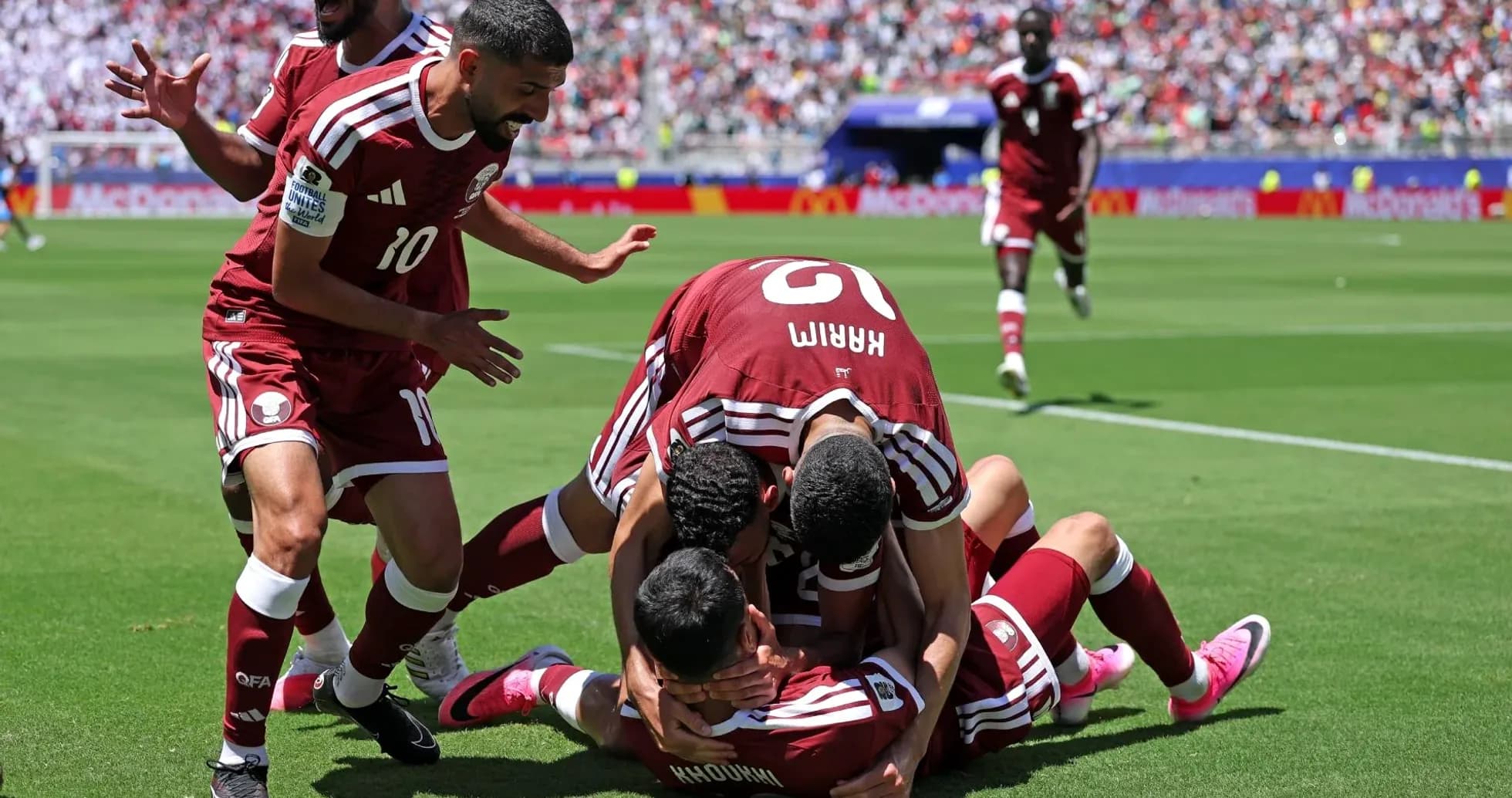
The scoreboard tells us Qatar trailed 0–1 at half-time and clawed it back to 1–1 by full-time. The arc of the match – Switzerland striking first through Breel Embolo, Qatar answering through Boualem Khoukhi – underlines the tactical tension that will define both squads as this group deepens.
II. Tactical Voids and Discipline – Where the Edges Show
Injury lists offer no guidance here; there is no data on absentees, so the real absences are structural rather than personnel-based.
For Qatar, the most glaring void is the lack of a defensive safety net. In total this campaign, they have 0 clean sheets and have conceded in every outing. The yellow card data is revealing: 100.00% of their cautions have arrived in the 16–30 minute window. That early spate of bookings hints at a side that starts tense, perhaps over-aggressive in duels as they try to impose themselves. Jassem Gaber embodies this fine line. Across his 60 minutes, he committed 2 fouls, picked up 1 yellow card, and yet still managed 1 tackle, 2 blocked shots and 8 duels, winning 3. He is both shield and potential liability.
Behind him, Mahmud Abunada is another paradox. The goalkeeper has already conceded 1 goal in total but made 5 saves and attempted to play, with 31 passes at 64% accuracy. He also sits on 1 yellow card and committed the foul that led to Switzerland’s penalty, a reminder that Qatar’s last line is being asked to live on the edge.
Switzerland’s disciplinary profile is cooler but not spotless. In total they have 1 yellow card, and it has come in the 31–45 minute range, a late-first-half moment where concentration can dip. Denis Zakaria is the face of that edge: 1 yellow card, 1 foul committed, but also 3 tackles and 2 interceptions, winning 6 of 10 duels. He is the enforcer who patrols the right side of the back four and steps into midfield, but his aggression is a lever opponents can pull.
III. Key Matchups – Hunter vs Shield, and the Engine Room
Hunter vs Shield is almost literal here. Qatar’s top scorer is a centre-back: Boualem Khoukhi. In total this campaign he has 1 goal from 1 shot on target, 34 passes at 70% accuracy, 1 tackle, 1 blocked shot, 2 interceptions and 2 fouls committed. He is the man who rescued a point and the man who must hold the line. For Qatar, the paradox is clear: their most clinical finisher so far is also their defensive anchor.
Opposite him stands Breel Embolo, Switzerland’s spearhead and penalty specialist. In total he has 1 goal, 1 penalty scored from 1 taken, 2 shots (1 on target) and 8 passes with 5 key passes at 75% accuracy. That blend of finishing and chance creation makes him more than a pure No.9; he drifts, links, and then appears in the box at decisive moments. The duel between Khoukhi’s anticipation and Embolo’s timing will define Switzerland’s attacking ceiling and Qatar’s defensive survival.
In the engine room, the confrontation is subtler but just as decisive. For Qatar, Jassem Gaber and Assim Omer Madibo are tasked with shuttling and screening in front of the back four, while I. Laye provides the third midfield angle. Their job is to compress space for Granit Xhaka and Remo Freuler, who orchestrate Switzerland’s rhythm.
Xhaka’s presence is less about raw numbers in this snapshot and more about his role: the metronome in the 3:2 pocket, receiving from Manuel Akanji and Nico Elvedi, turning pressure into progression. Freuler, to his left, adds balance and late runs. Together they feed the wide forwards Dan Ndoye and Ruben Vargas, who pin Qatar’s full-backs – Pedro Miguel and H. Al Amin – deep, forcing Qatar’s 4-3-3 to flatten into a 4-5-1 without the ball.
On Qatar’s side, the creative weight falls on Akram Afif and Edmilson Junior flanking Y. Abdurisag. Afif drifts infield to overload Xhaka’s zone, while Edmilson’s directness tests Ricardo Rodriguez and Zakaria. The question is whether Qatar’s front three can isolate Switzerland’s full-backs quickly enough before the Swiss midfield screen closes.
IV. Statistical Prognosis – Margins, Penalties, and Defensive Solvency
With both teams averaging 1.0 goals for and 1.0 against in total, the early-season numbers suggest balance rather than dominance. Neither side has yet kept a clean sheet; both have failed to shut down the opposition once. In a tournament context, that points toward matches decided by fine margins: set pieces, penalty decisions, and the timing of cards.
Switzerland’s perfect penalty record in total – 1 scored from 1, 100.00% – is a built-in edge in knockout-style pressure moments. Qatar, by contrast, have yet to take a penalty in total and have already conceded one. In a tight xG landscape, that differential from the spot could be decisive.
Defensively, Switzerland look marginally more stable in structure, with Zakaria’s 3 tackles and 2 interceptions complementing Akanji and Elvedi’s positioning. Qatar’s back line, while heroic in moments, is being asked to contribute at both ends, as Khoukhi’s goal underlines. Over a group campaign, that dual burden can fray.
Yet the narrative from Santa Clara is not of a mismatch, but of two sides whose flaws mirror each other. Qatar’s early yellow-card spike in the 16–30 minute window and Switzerland’s vulnerability to late-half lapses around 31–45’ create a tactical intersection: if Qatar can channel their initial aggression into controlled pressure rather than bookings, they can unsettle Switzerland before half-time. Conversely, if Switzerland continue to trust their penalty prowess and Embolo’s movement, they will always carry a threat, even when the game drifts.
Following this result, the numbers say parity. The eye test says Switzerland have the slightly sharper edge in both structure and set-piece ruthlessness, while Qatar possess the resilience and improvisation to drag any match into a contest. As the group unfolds, expect tight xG battles, low margins, and a recurring question: which side can finally turn that 1.0 average into the clean sheet that will separate survival from regret.